




By a special correspondent
As Sri Lanka edges toward a pivotal moment in its economic recovery, the latest review of its bailout programme with the International Monetary Fund (IMF) exposes a widening gap between domestic optimism and international caution.
The IMF staff mission, concluding its combined fifth and sixth reviews this week, may clear the way for a US$700 million disbursement under the Extended Fund Facility. Government officials describe progress as steady, citing improved fiscal discipline, rising revenue collections, and stronger macroeconomic indicators as proof of forward momentum.
At the centre of the government’s narrative is President Anura Kumara Dissanayake, who has confidently stated that Sri Lanka has met all IMF programme requirements. IMF officials acknowledge these accomplishments, particularly in areas such as revenue mobilisation and foreign reserve management, validating the government’s claims of tangible progress.
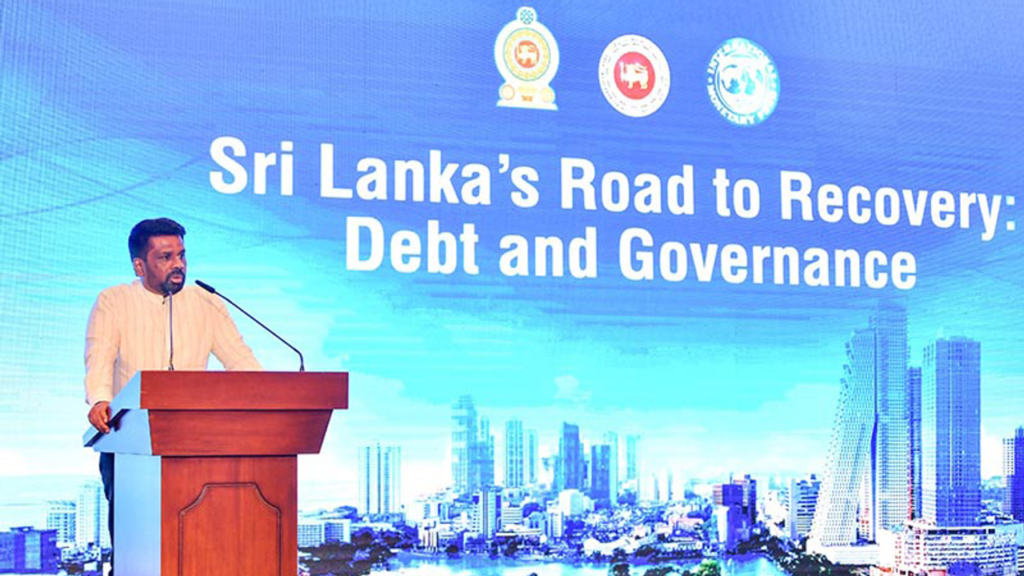
However cracks appear when future projections are compared. The government forecasts economic growth of nearly 5 percent, while the IMF projects a more conservative 3.1 percent. This divergence reflects contrasting assumptions about investment inflows, productivity improvements, and global conditions. Inflation expectations paint a similar picture: the Central Bank targets a steady 5 percent, whereas the IMF anticipates slightly higher inflation, factoring in energy price volatility and other external pressures.
These discrepancies go beyond technical forecasting they highlight underlying questions about the speed and sustainability of Sri Lanka’s recovery. Central to the IMF programme is debt sustainability, with the government committed to maintaining a primary surplus of 2.3 percent of GDP. Meeting this target requires strict fiscal discipline and consistent adherence to reform benchmarks, particularly in areas like State-Owned Enterprise (SOE) restructuring.
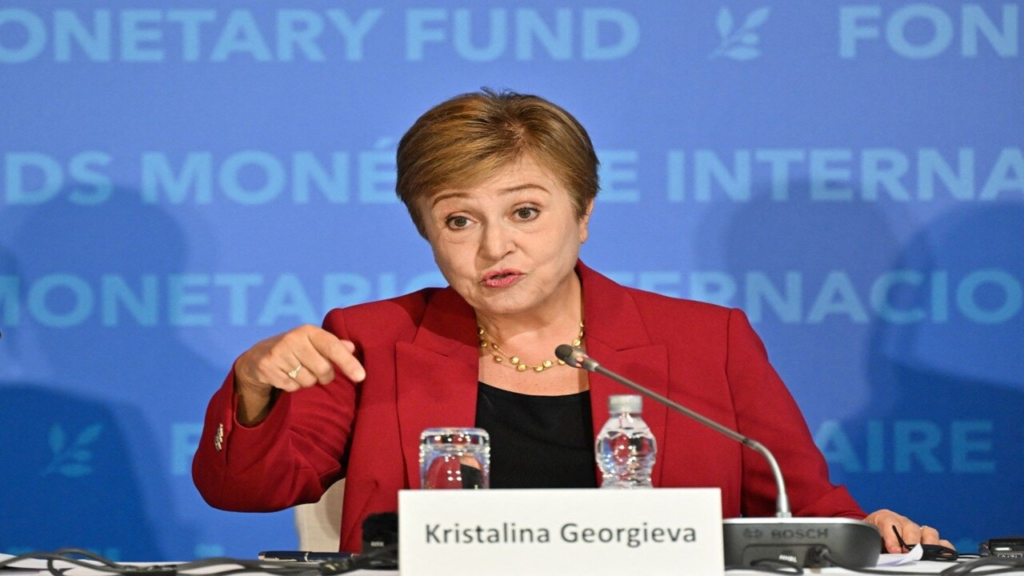
SOE reforms remain a crucial element of the roadmap, including multi-year restructuring plans and strengthened governance frameworks for major entities. In parallel, the government has imposed strict limits on new borrowing, especially in foreign currency, to prevent future financial strain. Politically sensitive pricing reforms, including automatic adjustments for fuel and electricity rates managed by the Ceylon Petroleum Corporation and Ceylon Electricity Board, are also seen by the IMF as essential to prevent recurring losses.
External risks continue to challenge Sri Lanka’s economic resilience. Geopolitical tensions, fluctuating global fuel prices, and climate shocks such as Cyclone Ditwah underscore the fragility of recovery efforts.
Even if the IMF Executive Board approves the next tranche, the broader test lies ahead: sustaining reforms while balancing ambitious growth targets with fiscal realities. The latest review is more than a procedural checkpoint it is a stark reminder that Sri Lanka’s economic stabilisation is still a work in progress, shaped as much by global forces as by domestic policy choices.