




By a special correspondent
Sri Lanka’s trade sector is facing a striking contradiction in 2026: while Sri Lanka Customs reports record-breaking revenue that has surpassed government targets, importers and port users warn that deep inefficiencies in cargo clearance are quietly straining the economy and driving up the cost of living.
At the center of the dispute are the Customs House Agents Traders Association and the Wharf Representatives Union, who have formally raised concerns about persistent delays and escalating costs linked to import clearance procedures. Their grievances follow extensive discussions examining the full customs workflow, from Long Room documentation processes to container transfers and inspections at examination yards.
Sri Lanka Customs has exceeded its revenue target for the third consecutive month, reaching the March target ahead of schedule, according to official data.
The March revenue target was set at Rs. 180.4 billion, while collections amounted to Rs. 184.8 billion within the first 26 days of the month, surpassing the target by 2.4%.
In 2025, Customs reported a record revenue of Rs. 2,551 billion, exceeding the revised target of Rs. 2,241 billion and reflecting a 64.2% increase from Rs. 1,553 billion recorded the previous year.
For 2026, the revenue target has been set at Rs. 2,207 billion, 13.5% lower than last year, amid expectations of a decline in vehicle imports. Data show that 28.8% of this year’s target was achieved within the first 85 days
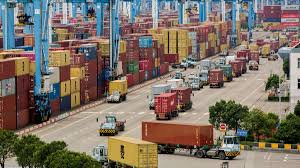
In letters sent to senior authorities including the Sri Lanka Ports Authority and the Treasury, industry stakeholders described a system that has slowed dramatically. Where goods were once cleared within 24 to 48 hours, the process now stretches to seven or even eight days. For a trade-dependent economy, this slowdown is more than an inconvenience it is a structural bottleneck.
Clearing agents and wharf clerks, who operate on the front lines, report daily operational disruptions. They point to poor coordination among agencies and inconsistent implementation of directives issued by senior officials. According to industry accounts, breakdowns occur not only due to procedural complexity but also because instructions from top management are often not followed at operational levels, creating avoidable congestion.
The financial consequences are substantial. The cost of clearing a single container has surged to around Rs. 260,000 when demurrage and associated charges are included. For containers held beyond a week, additional costs can reach approximately Rs. 105,000 per full container load. These expenses, traders argue, are ultimately transferred to importers and then to consumers, worsening inflationary pressures already felt across Sri Lanka.
Ironically, this inefficiency comes at a time when Customs revenue performance appears stronger than ever. In 2026, Sri Lanka Customs has exceeded its revenue targets, benefiting from tightened enforcement, higher import volumes, and currency-related valuation effects. However, economists caution that revenue growth driven by delays and penalties such as demurrage and storage fees may reflect systemic friction rather than genuine trade expansion.
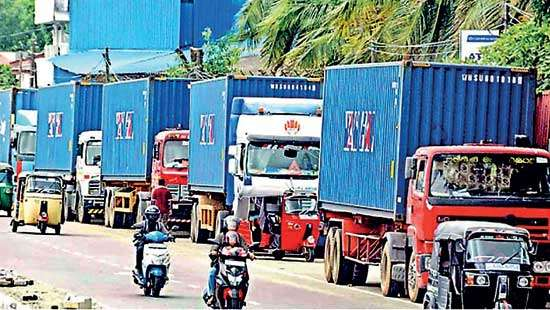
The broader economic implications are significant. Delays in clearance disrupt supply chains, reduce business competitiveness, and discourage timely imports of essential goods and industrial inputs. For small and medium enterprises in particular, prolonged cargo hold-ups can lead to cash flow constraints and lost market opportunities.