




SriLankan Airlines has entered another dangerous financial phase, with its latest annual report exposing a dramatic reversal in performance and a balance sheet increasingly overwhelmed by debt, accumulated losses and operational weaknesses.
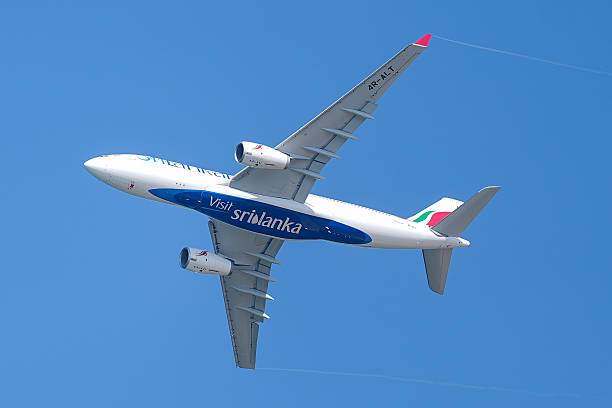
The national carrier recorded a net loss of Rs.7.59 billion in 2024/25, compared with a Rs.3.87 billion profit the previous year. At group level, including subsidiaries, the loss stood at Rs.2.73 billion. More alarming is the accumulated loss of the airline, which has now reached Rs.616.30 billion, while the group’s accumulated losses stand at Rs.596.46 billion.
The figures raise a fundamental question: how long can the airline remain financially viable without a comprehensive restructuring of its operations, liabilities and business model?
As at March 31, 2025, current liabilities exceeded current assets by Rs.368.29 billion, while the airline’s total equity showed a deficit of Rs.403.17 billion. The auditor has also highlighted uncertainty over the company’s future in the absence of financial support from the Government.
The crisis is occurring despite a significant recovery in Sri Lanka’s tourism sector. Instead of benefiting proportionately from higher tourist arrivals, SriLankan Airlines saw revenue fall 11%, from Rs.333.61 billion to Rs.296.50 billion. Passenger numbers also declined 4% to 3.47 million, while its market share at Bandaranaike International Airport dropped to approximately 40%.
Operational disruptions provide part of the explanation. Engine failures, shortages of spare parts and maintenance delays contributed to the cancellation of 487 flights during the year. Such disruptions do more than inconvenience passengers; they undermine confidence in the carrier, weaken its competitiveness and potentially divert passengers towards foreign airlines.
The airline is also facing an increasingly expensive debt burden. Net financial expenses amounted to Rs.31.59 billion, while emergency repairs to leased A320/A321 Neo engines required Rs.2.22 billion. A further Rs.13.45 billion provision has been made for penalties and outstanding obligations arising from the Rolls-Royce A350 contract dispute.
Total liabilities have reached Rs.585.14 billion, including Rs.91.31 billion in domestic state-bank loans and Rs.62.67 billion in overdue international bonds. The Treasury is intervening in relation to the domestic debt under the Government’s restructuring programme, while the airline has taken legal action against bondholders seeking control.
The investigation into the airline’s financial deterioration cannot therefore stop at the latest annual loss. The deeper issue is whether repeated Government intervention merely transfers the burden from the airline’s balance sheet to the public purse.
Meanwhile, recruitment of experienced engineers and technicians by Middle Eastern carriers has pushed employee costs up 7%, threatening to worsen operational difficulties.
SriLankan Airlines is consequently confronting a three-front crisis: mounting debt, shrinking operational capacity and declining competitiveness. Unless structural reforms address these problems simultaneously, further financial assistance could become another temporary rescue rather than a solution to the national carrier’s underlying crisis.