




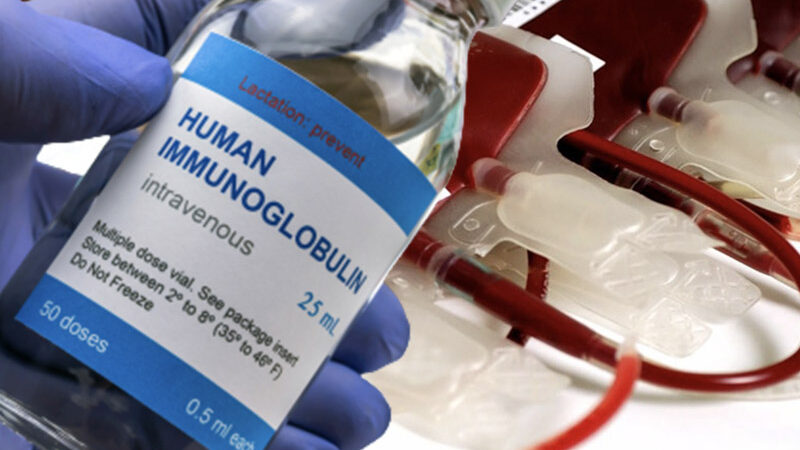
The highly controversial ‘substandard medicine’ case—involving the misappropriation of Rs. 144.4 million in public funds through the procurement of substandard Immunoglobulin and Rituximab for government hospitals—is currently being heard before the Colombo Permanent High Court-at-Bar. During yesterday’s (18) proceedings, it became increasingly evident how certain allegations leveled by the prosecution, alongside critical flaws in the investigative process, are systematically unraveling under intense cross-examination by the defense.
When the case was called before the Trial-at-Bar bench, comprising Presiding Judge Priyantha Liyanage and Judges Viraj Weerasuriya and Thilakarathna Bandara, a careful observation of the proceedings revealed a stark reality: certain allegations that sparked massive public outrage and social media uproar are at risk of being reduced to mere hollow claims when subjected to rigorous legal scrutiny.
Sample Collection and the Mystery of the Missing Seals
Yesterday’s primary focus rested on the testimony of Arjuna Dayasena Padmaperuma, Acting Director (Regulatory) of the National Medicines Regulatory Authority (NMRA). Counsel Harendra Banagala, representing the first accused, launched a rigorous cross-examination regarding how the witness, accompanied by a Sub-Inspector of the Criminal Investigation Department (CID), transported 100 vials each of the questioned drugs to a laboratory in Germany.
- Counsel Harendra Banagala: “Regarding the transportation of the drug vials obtained from the Medical Supplies Division to Germany, you testified yesterday that they were packed in styrofoam boxes. From where did you obtain those styrofoam boxes?”
- Witness: “Those boxes were obtained from the Medical Supplies Division.”
- Counsel: “Was a staff officer present to observe the collection of the relevant samples?”
- Witness: “Although the Assistant Director was informed that the samples were being taken, no staff officer was present on that occasion.”
- Counsel: “Was a representative of Isolab Biotech Pharma, the manufacturing company, present when those samples were collected?”
- Witness: “I must state that no such person was present.”
Raising profound suspicions regarding the formal protocols required when taking case productions abroad, the counsel scrutinized how the boxes were sealed. The witness admitted that neither the official seal of the NMRA nor that of the CID was utilized; the boxes were sealed using only the seal of the storekeeper.
- No Photographs, No Reports: Is the Chain of Custody Collapsing?
- The defense counsel’s subsequent line of questioning effectively highlighted the fragile state of the ‘Chain of Custody’ in this criminal investigation.
- Counsel: “Did you obtain a report regarding the sealing to submit in Germany?”
- Witness: “No such report was obtained. Mr. Laksiri and I personally observed the collection of the goods.”
- Counsel: “Shouldn’t a formal report be handed over regarding that?”
- Witness: “Such a requirement did not arise. The drug samples were examined.”
- Counsel: “Did you not carry any reports concerning the procedure?”
- Witness: “I did not carry any such report.”
- Counsel: “You are well aware that these samples were taken for a judicial requirement. Did you not retain such a report even to present it to the court?”
- Witness: “No such report was obtained.” (The witness also admitted that the process was neither photographed nor video-recorded).
- Counsel: “Is there any acceptable evidence to prove that these packages were handed over unopened?”
- Witness: “No.”
- Counsel: “I put it to you that you failed to follow the proper procedure when obtaining these samples.”
- Witness: “I reject that suggestion.”
The Cold Chain and the Data Logger Enigma
The defense also launched a severe critique regarding the maintenance of the ‘Cold Chain,’ which is a critical factor in the transportation of pharmaceuticals.
- Counsel: “You mentioned that a data logger was placed inside the box where the samples were packed. From which institution was that data logger purchased?”
- Witness: “It was purchased from a private institution. I have the relevant specifications.”
- Counsel: “Is there any certification to prove that the relevant data logger was actually placed inside those packages?”
- Witness: “There is no such certificate. There are no related photographs either.”
- Counsel: “I suggest to you that this data logger was never placed inside the relevant sample boxes.” Witness: “I reject that.” (The witness also rejected the defense’s suggestion that there was no guarantee proving the cold chain was maintained).
- Counsel: “What is the lifespan of the cool packs in which the relevant drugs were transported?” Witness: “A specific lifespan cannot be stated. It can be maintained for a certain period to preserve the required cold chain.”
- Counsel: “What do you mean by a ‘certain period’?”
- Witness: “It could be three or four days.”
- Counsel: “Do you have concrete data to certify that claim?”
- Witness: “I do not possess such data. However, I am stating it based on available experience.”
- Subsequently, the counsel inquired about the logistics of transporting the samples.
- Counsel: “Was the sealed container transported on an airplane?”
- Witness: “It was transported on an aircraft belonging to SriLankan Airlines.”
- Counsel: “To whom were the relevant documents handed over?”
- Witness: “There were no relevant documents. The boxes containing the samples were handed over merely as luggage.”
- Counsel: “You are the state official assigned to this duty. There is no guarantee that these boxes were properly sealed. There is no document proving they were officially handed over to the airline. There is no report confirming the cold chain was maintained upon arrival in Germany. I put it to you that the transfer of these goods from the Medical Supplies Division to Germany was executed without a shred of accountability.”
- Witness: “I reject that suggestion.”
The Drugs’ History and Local Pharmaceutical Manufacturing
Citing a circular issued on October 17, 2023, which mandated the withdrawal of all products manufactured by Isolab Biotech Pharma, the counsel questioned the witness’s knowledge of the samples’ whereabouts prior to collection—especially since they were collected a year and four months after the circular was issued. The witness admitted he only knew they were at the Medical Supplies Division at the exact moment of collection.
Furthermore, responding to an inquiry regarding local pharmaceutical manufacturing, the witness stated that while there are 26 pharmaceutical companies in Sri Lanka, there are zero companies manufacturing vaccines locally. Although the defense suggested this was false testimony, the witness firmly rejected the claim.
Re-examination by the Prosecution and Judicial Intervention
Following the cross-examination, the Deputy Solicitor General (DSG) commenced re-examination on behalf of the prosecution.
- Deputy Solicitor General: “You were cross-examined regarding taking the samples to Germany. From whom did you receive instructions to look into that matter?”
- Witness: “There is a court order regarding that. The Chairman summoned me and informed me of it.” (He added that the order did not instruct them to take photographs or videos).
- Deputy Solicitor General: “You stated that a notification was made to the Dangerous Cargo Section when transporting these goods.”
- Witness: “Yes, a notification was made.”
- At this juncture, Presiding Judge Priyantha Liyanage intervened directly.
- Judge Priyantha Liyanage: “What exactly is that section?”
- Witness: “Since the packages contained biological items, we notified them of that fact. We gave them the necessary instructions to keep them undisturbed.”
- Judge Priyantha Liyanage: “What was the expectation behind doing that?”
- Witness: “The expectation was to ensure they would not be damaged.”
Thereafter, responding to the DSG, the witness confirmed that the German laboratory did not refuse to accept the case productions, and that the two data loggers contained within the packages were later collected by the CID officer.
Telephone Data and the Legal Prudence of the Defense
The next phase of the trial shifted to the telephone conversations of the accused. Dhammika Dinesh, Coordinating Investigator of SLT Mobitel, was questioned by the DSG. She presented to the court a CD and a detailed document containing data on calls exchanged between January 2022 and October 2023. The witness affirmed that the identity of the person who obtained a given SIM card could be verified through the associated National Identity Card (NIC) number.
When the Presiding Judge inquired whether the defense would admit this data as evidence, Counsel Nayantha Wijesundara, representing the eighth accused, former Health Minister Keheliya Rambukwella, offered a highly prudent legal response.
Counsel Nayantha Wijesundara: “If the relevant telephone call report is formally provided to us, we can study it and subsequently make a submission on whether to admit it or not.”
Following this, Counsel Amitha Ariyaratne, representing the 11th accused, cross-examined the witness and verified facts concerning 93 specific telephone conversations exchanged between a witness and the first accused.
Additionally, before cross-examining the CID investigating officer, the defense counsels vehemently requested access to the complete case record of the proceedings thus far. Emphasizing that this access is essential to safeguarding the rights of the accused, the Presiding Judge agreed to issue an order regarding the matter.
It was also brought to the court’s attention that although summons had been issued to obtain evidence from a German national, the German government had informed the court that facilitating this was not possible, prompting the bench to consider alternative judicial measures.
Yesterday’s rigorous cross-examinations clearly demonstrated the immense difficulty of legally proving allegations—many of which have already been deemed ‘guilty verdicts’ by the court of public opinion—without concrete, systematic evidence. The proceedings effectively exposed the gaping loopholes and procedural lapses within the criminal investigation mechanism.