




The launch of the Sri Lanka Brand Forum marks an ambitious attempt to reposition Sri Lanka’s business landscape for a rapidly changing world. Yet the initiative also brings into sharp focus a fundamental contradiction: a growing emphasis on purpose-driven enterprise without a clearly defined national policy framework to support it.
At the heart of the SLBF is the idea that businesses must evolve beyond profit-making to become agents of social impact and sustainability. Founder Shariful Islam framed this shift as essential in a “BANI world,” where unpredictability and disruption are the norm. The message is clearcompanies must become more resilient, accountable, and globally competitive.
However, this vision appears to be advancing in a policy vacuum. Under the leadership of President Anura Kumara Dissanayake and the JVP-led NPP government, there is still no comprehensive blueprint outlining how the private sector will be integrated into the country’s broader economic strategy. This lack of clarity creates uncertainty for investors and businesses alike, particularly at a time when global competition is intensifying.
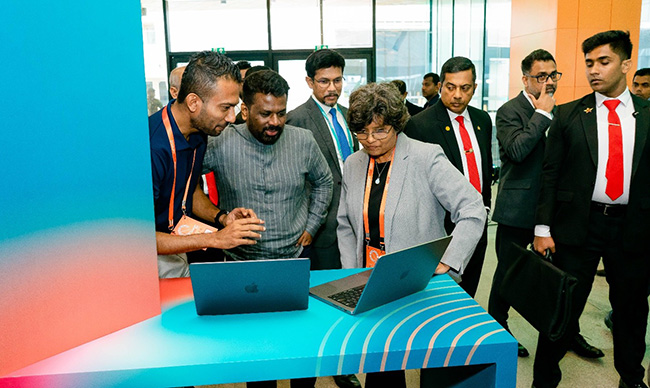
SLBF Co-Founder Rohan Somawansa emphasised that countries are increasingly competing on perception, identity, and credibility rather than just resources. While this reflects a shift in global economic dynamics, it also highlights a gap in Sri Lanka’s approach. Building a strong national brand requires alignment between policy, governance, and private sector activity something that remains inconsistent.
The forum’s planned initiatives ranging from leadership summits to research platforms aim to equip businesses with the tools needed to navigate disruption. Events such as the upcoming Leadership Summit will bring together global experts to discuss resilience and innovation. Yet these efforts, while valuable, cannot substitute for structural reforms at the national level.
A key concern is whether the Government’s ideological orientation toward economic management aligns with the needs of a dynamic private sector. Historically, tensions between state control and market-driven growth have created uncertainty in Sri Lanka’s policy environment. Without clear signals on issues such as regulation, foreign investment, and public-private partnerships, businesses may find it difficult to fully embrace the purpose-driven model being promoted.
Moreover, the focus on inclusivity and youth empowerment, though commendable, raises expectations that must be matched by tangible outcomes. With younger generations demanding transparency and accountability, any disconnect between rhetoric and reality could undermine trust in both institutions and businesses.
In essence, the SLBF highlights a paradox at the heart of Sri Lanka’s economic transition. While the private sector is being encouraged to adopt a forward-looking, purpose-driven approach, the absence of a coherent national strategy risks limiting its impact. Unless policy clarity emerges, the country’s branding ambitions may struggle to translate into meaningful economic transformation.