




By a special correspondent
Inside e-Motoring: A Special Investigative Series
Examining the past, present, and future of Sri Lanka’s delayed digital vehicle registration reform
Beginning on 31-03-2024 lanknews .lk website continues a special investigative series on Sri Lanka’s long-delayed e-Motoring project, a national digital initiative intended to modernize the Department of Motor Traffic (DMT) and transform the country’s vehicle registration system.
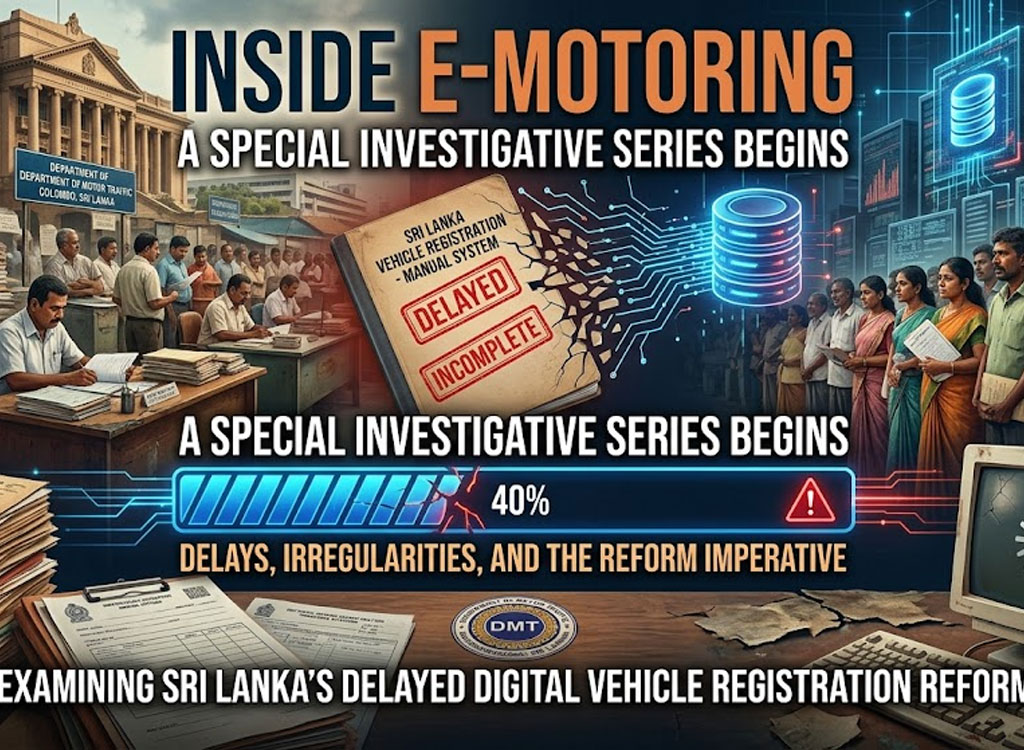
For years, the project has been presented as a key step toward efficiency, transparency, and improved public service delivery. Nevertheless, despite its importance and repeated assurances of progress, it remains incomplete. Delays, procurement controversies, and administrative challenges have raised serious questions about how such a critical reform has been managed.
This series seeks to bring clarity to those questions.

Fourth of the series

Red Tape and Corruption Stall Sri Lanka’s Digital Motor Reform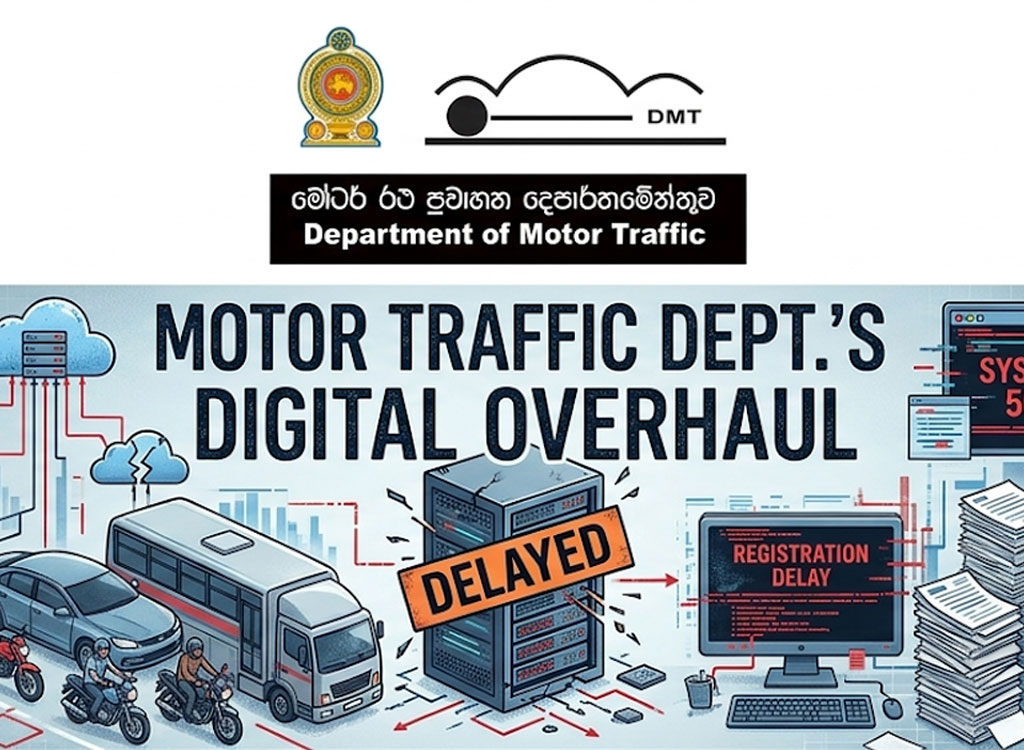
For years, public debate around Sri Lanka’s stalled e-Motoring project has focused heavily on corruption and procurement controversies. Yet, beneath these visible issues lies a quieter but equally damaging force: bureaucratic red tape. This administrative inertia has emerged as a critical barrier, slowing progress on a project intended to modernize one of the country’s most essential public services.
Bureaucracy, by design, is meant to ensure accountability and oversight. However, when procedures become excessively layered and inflexible, they often achieve the opposite—paralyzing decision-making and delaying implementation. The Department of Motor Traffic (DMT) exemplifies this dilemma. From infrastructure approvals to vendor coordination and system integration, nearly every stage of the e-Motoring initiative has required multiple levels of authorization, creating a system prone to stagnation.
Even seemingly minor logistical issues have contributed to significant delays. Reports indicate that the lack of adequate workspace at the DMT’s Narahenpita office stalled implementation between 2019 and 2020, as private partners could not be accommodated. Such bottlenecks point to a broader structural weakness: the absence of streamlined decision-making processes for projects of national importance.
Originally launched in 2009, the e-Motoring project aimed to digitize vehicle registration processes, reduce human interference, and curb corruption. Despite a target completion date set for 2026, the project has been repeatedly restarted due to a combination of administrative inefficiencies, technical setbacks, and governance failures.
One major disruption occurred when an international technology partner exited the project, triggering prolonged renegotiations and pricing disputes. Meanwhile, the department continues to rely on outdated computer systems dating back to 1996. These systems are maintained by in-house staff who often lack the specialized expertise required for a modern digital transformation, further complicating progress.
Investigations by oversight bodies have revealed the scale of corruption the digital system was meant to eliminate. Senior officials have been implicated in facilitating illegal vehicle registrations, manipulating chassis numbers, and bypassing customs regulations. In some cases, luxury vehicles were falsely recorded as tractors to evade taxes, while physical records were allegedly destroyed to conceal fraudulent activities. One probe involving nearly 400 illegally registered vehicles estimated government revenue losses of approximately Rs. 3,000 million.
A wave of arrests has underscored the depth of the crisis. Both current and former high-ranking officials within the DMT have faced charges related to fraudulent registrations and abuse of authority. Additional officers have also been detained for approving forged documentation and bypassing mandatory procedures. These revelations highlight how systemic corruption has flourished in the absence of robust digital oversight.
The consequences for the public have been severe. Without a functioning e-Motoring system, citizens remain trapped in inefficient, manual processes. Delays in issuing driving licenses and vehicle registrations have created significant backlogs, while the lack of integration between databases has caused widespread inconvenience. For instance, mismatches between vehicle records and the national fuel quota system previously prevented many owners from obtaining necessary QR codes.
Technical challenges have further compounded the problem. Of the six planned modules for the e-Motoring platform, only three had been delivered by early 2024, leading to legal disputes with contractors. Disagreements over additional costs for infrastructure upgrades and evolving technical requirements such as real-time data integration with other government systems have added layers of complexity to an already troubled project.
Ultimately, the failure of the e-Motoring initiative reflects more than isolated incidents of corruption or mismanagement. It reveals a systemic issue where bureaucratic rigidity, outdated infrastructure, and weak oversight intersect to obstruct meaningful reform. Until these underlying challenges are addressed, Sri Lanka’s path toward digital governance in motor traffic administration will likely remain stalled.