




The return of a former Sri Lanka Ports Authority (SLPA) chairman to a high-value commercial development inside Colombo Port City has raised renewed questions about accountability, institutional safeguards and the handling of unresolved corruption allegations involving senior public officials.
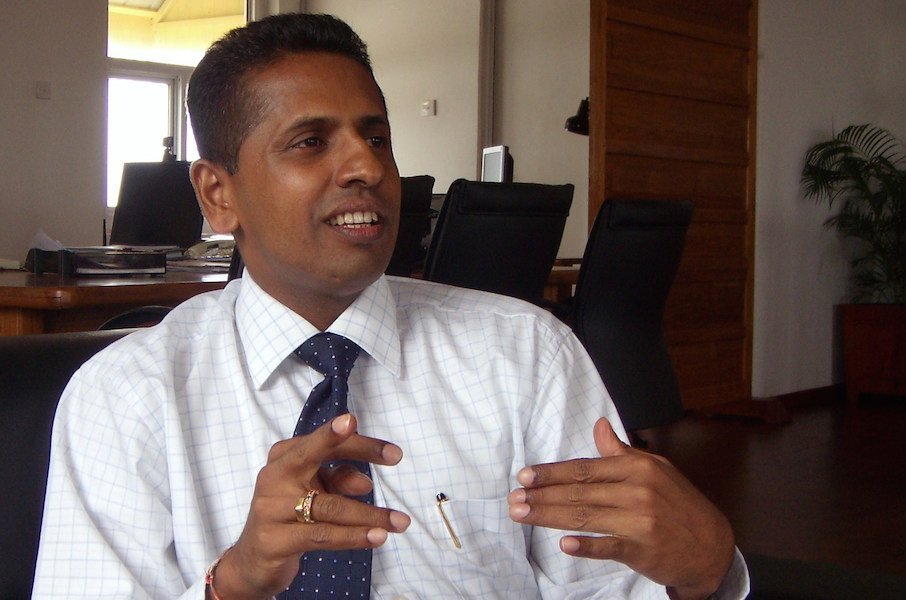
Dr. Priyath Bandu Wickrama, who previously headed the SLPA, is currently facing trial before the Colombo High Court in a case filed by the Commission to Investigate Allegations of Bribery o Corruption (CIABOC). The case contains 10 counts under Section 70 of the Bribery Act.
The allegations concern the unlawful deployment of 319 SLPA employees for political and election campaign work in the run-up to the January 2015 Presidential Election. According to the prosecution, state funds were used to pay their salaries and overtime allowances, causing an estimated government loss of approximately Rs. 65 million.
The High Court has formally served indictments on Wickrama and two other former officials—former Operating Equipment Operator R.B. Sanjaya Kumara and former Managing Director Nihal Keppetipola. The case is proceeding to trial, with the prosecution naming 90 witnesses and presenting 17 items of production as evidence.
The significance of the case extends beyond the alleged financial loss. It raises a fundamental question about whether public institutions can be used as political instruments, particularly during election periods, while taxpayers carry the financial burden.
Wickrama has since moved into the private sector and currently serves as Chief Executive Officer of Clothespin Management and Development (Private) Limited. He is also Chairman and Consultant of Bestar Consultancy Pvt Ltd.
His most prominent commercial involvement is the “Cey Laya” project within Port City Colombo. The project, spearheaded by Clothespin Management and Development, was recently repositioned following commercial negotiations with China Harbour Engineering Company (CHEC). The development was shifted to a new land plot described as more suitable for the project’s commercial objectives.
Although the repositioning may represent a legitimate commercial adjustment, Wickrama’s leadership role inevitably places renewed attention on the relationship between unresolved public-sector allegations and access to major private development opportunities.
The concerns are not limited to the SLPA case. Wickrama was previously questioned by the Police Financial Crimes Investigation Division over allegations relating to the undervaluation of television equipment imported from the United Kingdom for Carlton Sports Network. He has also been named in allegations concerning offshore assets and untaxed wealth, while the CID previously questioned his wife over suspected financial irregularities linked to major harbour expansion-related transactions involving China Communications Construction Company.
These allegations must be distinguished from proven wrongdoing. The active High Court case remains subject to judicial determination, while other allegations require due process and substantiated evidence.
Nevertheless, the renewed Port City role highlights the need for stronger disclosure requirements, conflict-of-interest safeguards and transparent scrutiny whenever individuals facing unresolved corruption allegations become involved in strategically important national developments.