




SriLankan Airlines, long regarded as a symbol of national pride, has become one of the biggest tests of President Anura Kumara Dissanayake’s National People’s Power (NPP) government. Less than two years after taking office on a pledge to protect state-owned enterprises from privatization, the administration is now steering the loss-making national carrier toward a Public-Private Partnership (PPP), marking one of the most dramatic policy reversals of its tenure.
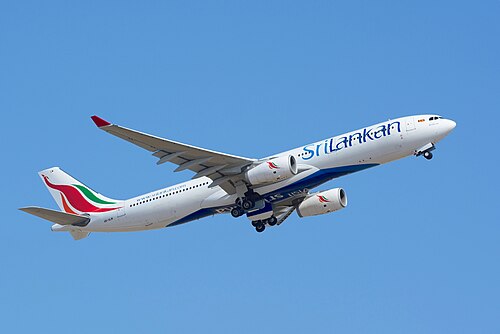
The shift has been driven not by ideology, but by mounting financial pressure. Despite recording occasional operational improvements and exchange-rate gains, SriLankan Airlines posted a group loss of Rs. 2.73 billion in the 2024/25 financial year. More alarmingly, accumulated losses have exceeded Rs. 600 billion, leaving the airline technically insolvent and dependent on continuous government support.
The burden on taxpayers has become increasingly difficult to justify. The Treasury is expected to inject nearly Rs. 90 billion into the airline through 2030, with around Rs. 30 billion allocated annually. In mid-2026, the carrier sought an additional emergency allocation of Rs. 10 billion simply to sustain day-to-day operations. Even ministers within the government have publicly described the business model as “unsustainable,” questioning why citizens who have never flown should continue financing the airline.
Faced with these realities and commitments under Sri Lanka’s IMF-backed economic reform programme, the government abandoned its earlier opposition to private investment. The Ministry of Ports, Civil Aviation and Energy has confirmed that the State can no longer operate the airline alone and is preparing proposals to attract a strategic investor while retaining a minority ownership stake.
To improve the airline’s appeal, the government has undertaken sweeping debt restructuring. In May 2026, it restructured Rs. 91.3 billion in loans owed to state banks, with the Treasury assuming responsibility for repayments through periodic capital injections. Internationally, creditors accepted a 16 percent haircut on the airline’s USD 175 million sovereign-guaranteed bond, easing part of its external debt burden.
However, financial restructuring alone cannot resolve deep-rooted governance challenges. For more than a year, SriLankan Airlines has operated without a permanent Chief Executive Officer. Although A.K.D.D. Dimal Arandara was appointed permanent Chairman in June after serving in an acting capacity, executive leadership remains in limbo, with Yasantha Dissanayake continuing as Acting CEO while an international recruitment process nears completion.
Operational pressures have further complicated the recovery. Global aircraft shortages have frustrated plans to expand the fleet, with the airline requiring at least seven additional aircraft but struggling to secure even a single dry lease. Rising jet fuel prices, fuelled by instability in the Middle East, have further strained finances. Nevertheless, the government has maintained long-haul services to destinations such as London, Paris and Sydney, betting that uninterrupted connectivity is essential for Sri Lanka’s tourism recovery.
To oversee the transformation, the government has appointed a Strategic Review and Restructuring Committee chaired by Presidential Adviser Dr. Hans Wijayasuriya, working alongside the International Finance Corporation as transaction adviser. Their mission is clear: secure investors and complete the transition to a commercially viable PPP before the end of 2026. Whether that strategy finally ends decades of financial turbulence or merely postpones another bailout—remains the defining question.