




Sri Lanka’s National People’s Power (NPP) government is steering through a critical phase of economic recovery, buoyed by major nods of approval from international financial institutions. Following a crucial visit by an International Monetary Fund (IMF) delegation and a surprise income status upgrade by the World Bank, the administration is celebrating near-term victories while facing intense scrutiny over long-term sustainability.
1. The IMF Verdict: “Staying the Course” Amid External Shocks
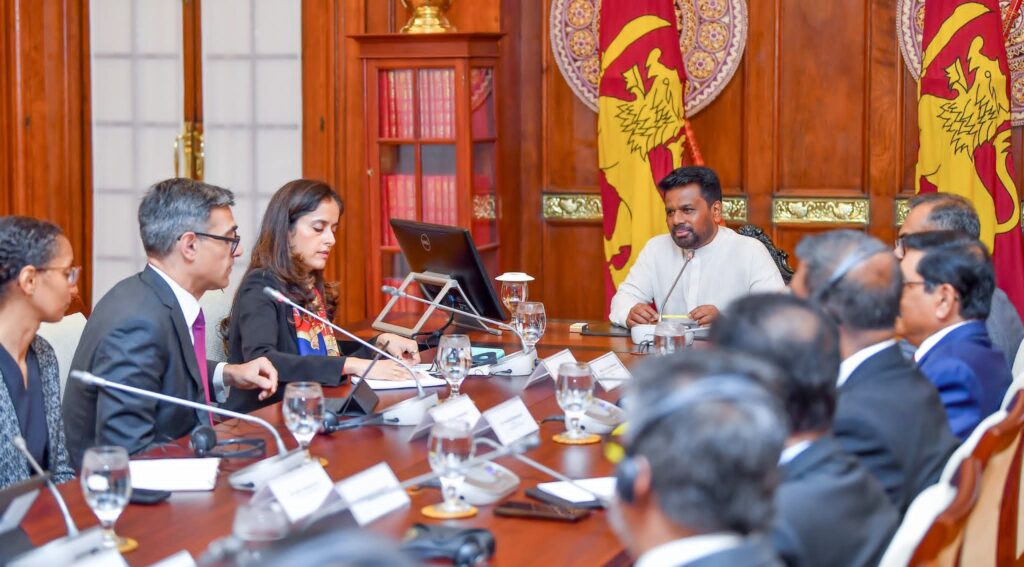
An IMF delegation wrapped up a key stock-taking visit to Colombo (June 24–30), holding extensive discussions with President and Finance Minister Anura Kumara Dissanayake, Prime Minister Harini Amarasuriya, and top central bank and treasury officials.
According to the President’s Media Division (PMD), the IMF praised the government’s stewardship of the economy. President Dissanayake reiterated that his administration’s commitment to reforms is driven by internal necessity rather than external pressure, despite severe headwinds over the past 18 months, including:
- Global trade disruptions stemming from US tariffs.
- The domestic devastation caused by Cyclone Ditwah.
- Heightened supply-chain bottlenecks and oil price volatility due to the Middle East conflict.
IMF Mission Chief Evan Papageorgiou commended the government’s swift shock management but stressed that maintaining momentum is non-negotiable.
The IMF’s Fiscal Roadmap: Following temporary fiscal easing in 2026, the government has committed to returning to a strict primary balance target of 2.3% of GDP by 2027.
To meet this, the IMF expects continued focus on broadening the tax base, structural reforms of State-Owned Enterprises (SOEs), cost-recovery energy pricing, and resolving bottlenecks in disaster-related spending for post-cyclone reconstruction. Crucially, Papageorgiou emphasized that vulnerable families must remain protected through well-targeted social safety nets. Sri Lanka’s formal assessment will take place during the Seventh Review of the EFF in September.
2. Back to Upper-Middle Income: A Story of Resilience
In a major psychological and statistical boost, the World Bank Group’s latest country income classifications officially upgraded Sri Lanka from lower-middle to upper-middle-income status. Sri Lanka shared this upward move with Jordan, Micronesia, the Philippines, and Viet Nam.
However, the World Bank noted that Sri Lanka “narrowly crossed the threshold.” Economists have quickly pointed out a cautionary historical parallel: Sri Lanka previously achieved upper-middle-income status in 2019, only to be downgraded the following year just before sliding into the catastrophic 2022 crisis.
3. The 2027 Deadline: Opposition Sounds the Alarm
Despite the optimism, the political front remains fiercely divided over what happens when the current IMF Extended Fund Facility (EFF) ends in March 2027.
Opposition Leader Sajith Premadasa has urged the government to immediately open talks for a successor IMF programme. The opposition argues that without a safety net in place, Sri Lanka will struggle immensely to hit gross official reserve targets independently once the current arrangement expires.
The government has dismissed these fears as premature. Foreign Affairs and Tourism Minister Vijitha Herath slammed opposition critics, stating:
“Not too long ago, those in the opposition were sounding alarm bells, insisting our government could not manage the economy… but look at what has happened.”
Minister Herath maintained that while a successor programme is not ruled out, a decision will only be made next year after a comprehensive assessment towards the tail-end of the current cycle.
4. Strengthening the Team: Hulangamuwa Takes the Helm at BOI
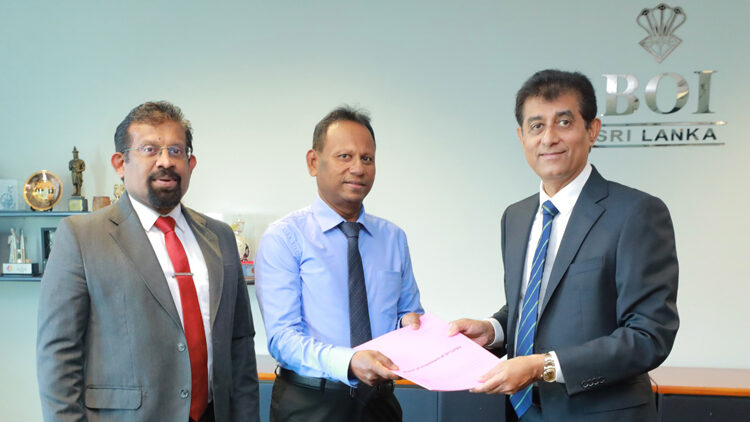
In a clear sign of the NPP government aligning itself with corporate expertise to drive Foreign Direct Investment (FDI), Presidential Economic Advisor Duminda Hulangamuwa has been appointed as the new Chairman of the Board of Investment (BOI).
Hlangamuwa, who simultaneously retired as the Country Managing Partner of Ernst & Young Sri Lanka and the Maldives after a 40-year career, cements his role as one of the most vital private-sector professionals trusted by President Dissanayake to map out the nation’s growth.