




A fresh financial controversy has intensified scrutiny on Sri Lanka’s public finance management, as allegations of duplicate payments exceeding Rs. 380 million to contractors linked to the Road Development Authority (RDA) expose deeper institutional weaknesses. What initially appeared to be a technical mishap has evolved into a broader debate about governance failures under the National People’s Power (NPP) administration.
The issue surfaced when Opposition MP Nalin Bandara Jayamaha raised concerns in Parliament, alleging that contractors had been paid twice through RDA-linked transactions. His claims were soon echoed by Namal Rajapaksa, who cited a Bank of Ceylon recall notice indicating that at least Rs. 263 million had been mistakenly transferred due to a “system error.”
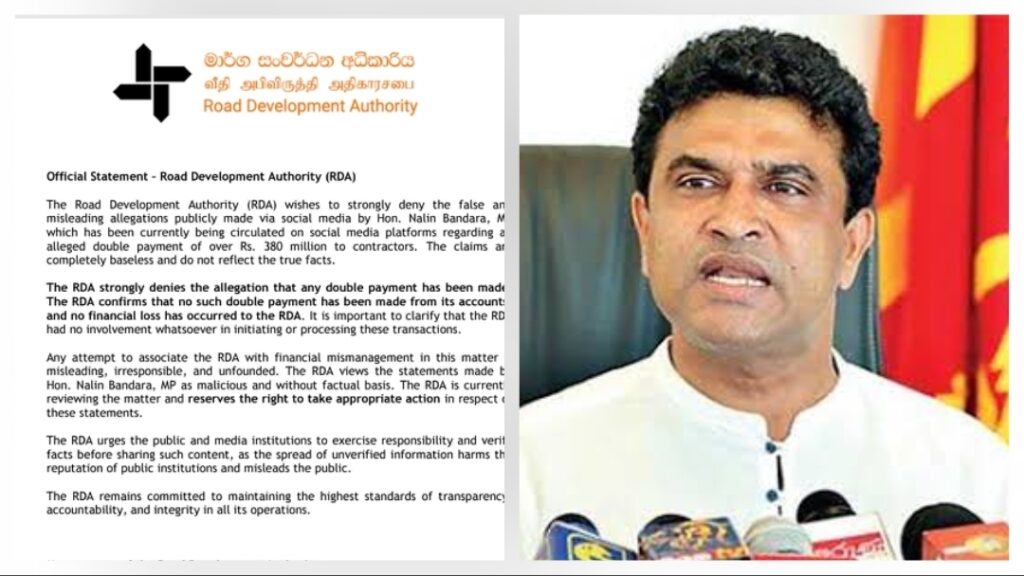
However, the RDA swiftly rejected these allegations, maintaining that it had made only a single payment to contractors approximately 15 months earlier. According to RDA Director General H.H.N.A. Hettiarachchi, the duplication occurred not within the agency’s accounts but during a bank-level transmission process. This explanation shifts responsibility toward institutional coordination failures between government bodies and state banks.
Cabinet Spokesperson Nalinda Jayatissa further clarified that the discrepancy arose during file transmission within the Sri Lanka Inter-Bank Payment System. While he emphasized that the bank had mechanisms to recover the funds and assured that government accounts remained unaffected, this reassurance has done little to quell public concern.
Contradictions remain central to the controversy. Despite categorical denials from the RDA, reports indicate that contractors were contacted and asked to return excess payments raising questions about transparency and accountability. If no double payment occurred, critics ask, why initiate recovery efforts?
Beyond the immediate financial implications, the episode underscores systemic inefficiencies. Analysts point to a lack of robust verification protocols, weak communication between institutions, and inadequate oversight mechanisms. Under the NPP government, which campaigned on reform and accountability, such lapses risk undermining public trust.
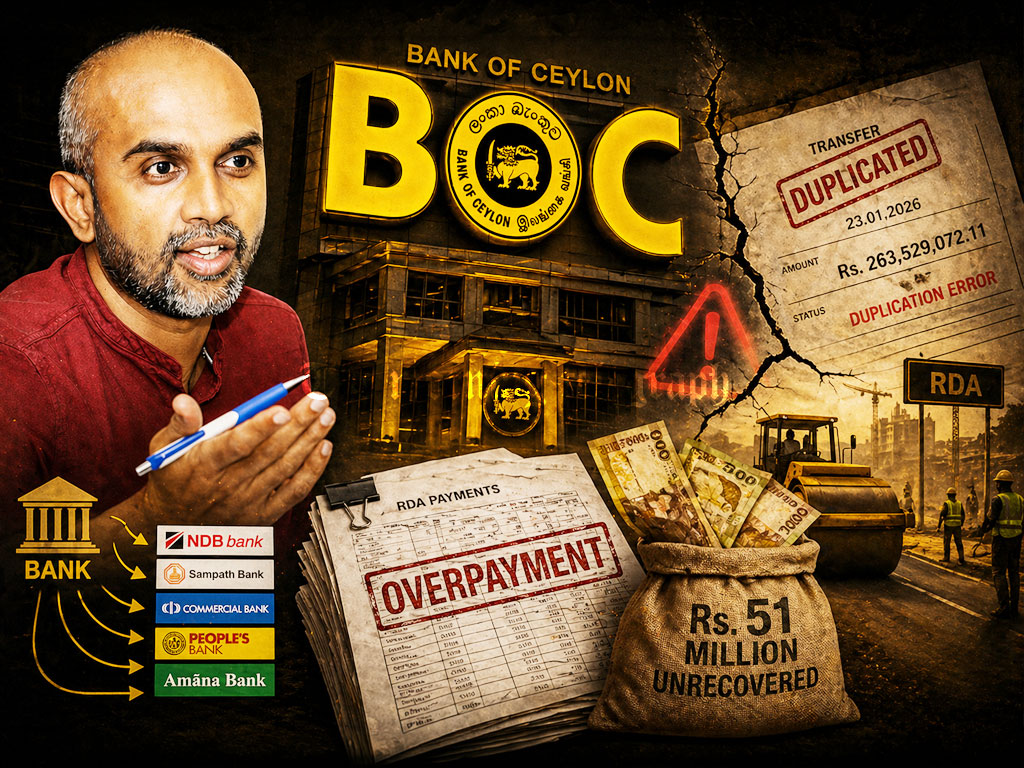
Moreover, the incident highlights the fragility of digital financial systems when not supported by clear procedural safeguards. A “system error” of this magnitude suggests deeper structural vulnerabilities rather than an isolated glitch. The absence of clear, unified communication from involved entities has only fueled speculation and political contention.
Ultimately, the RDA payment controversy is less about a single transaction and more about the credibility of public financial management. As investigations continue, the government faces mounting pressure to demonstrate not only that funds can be recovered, but that such costly errors will not recur. Without decisive reforms, the perception of institutional malpractice and inefficiency may prove more damaging than the financial loss itself.
By a Special Correspondent