




By a special correspondent
Hambantota International Port is showing signs of transformation as it records its highest-ever single-vessel container handling volume, raising questions about whether the facility is finally evolving into a viable regional transshipment hub. The port recently handled 13,260 TEUs from the MSC Marie Leslie during a four-day operation in April, marking a new benchmark in its operational history.
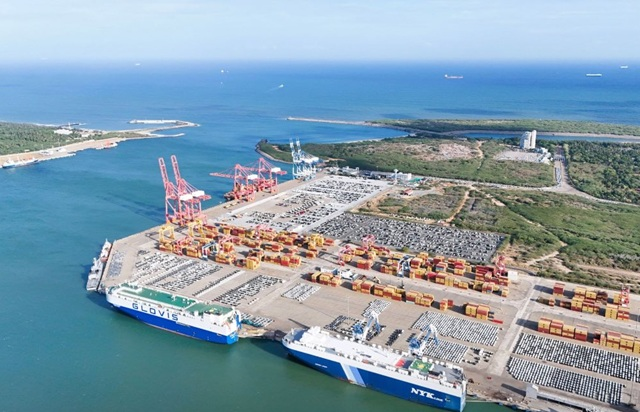
This performance builds on a series of recent gains, including handling 12,957 TEUs from MSC Ilenia and over 11,000 TEUs from MSC Ruby in March. The consistent rise in container volumes suggests a deliberate scaling-up strategy rather than isolated operational success. Port authorities attribute this growth to improved coordination across operational units and increasing efficiency in handling larger vessels.
Located just 10 nautical miles from one of the world’s busiest East–West shipping routes, Hambantota Port holds a natural geographic advantage. This proximity allows it to position itself as an alternative to congested regional hubs, particularly as global shipping lines seek faster turnaround times and cost efficiencies. Increasing congestion in established ports has created an opportunity for emerging facilities like Hambantota to capture spillover traffic.
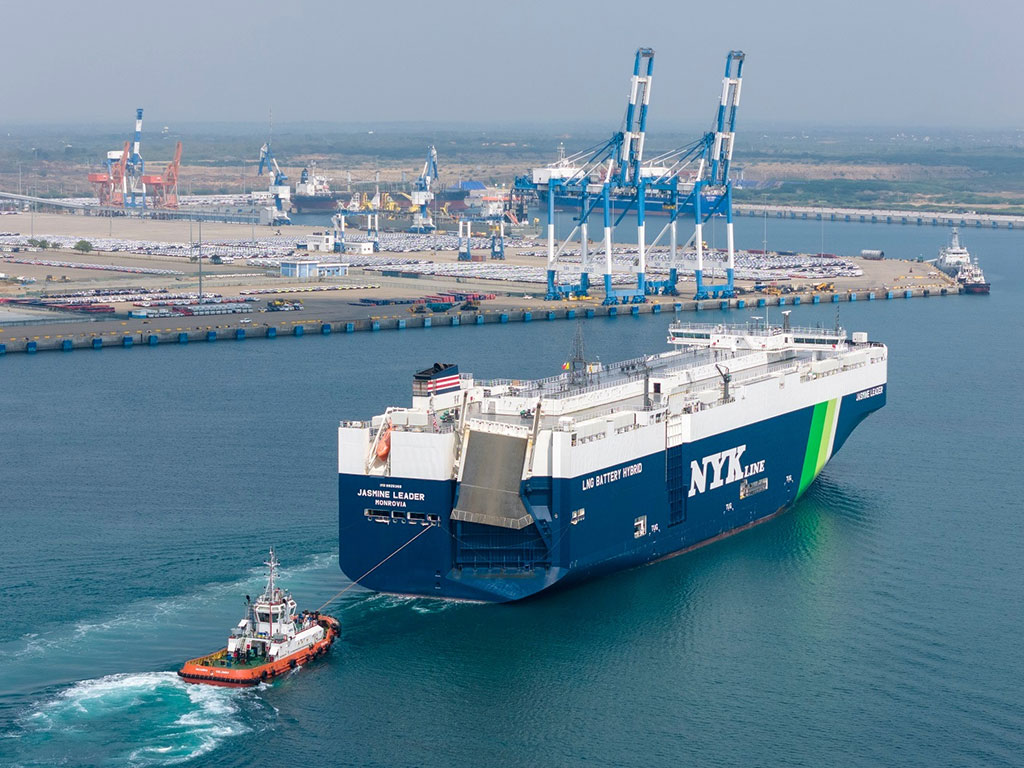
However, while the rising throughput figures are encouraging, analysts caution against overestimating the port’s progress. Hambantota still operates in the shadow of more established ports in the region, particularly Colombo, which remains Sri Lanka’s primary transshipment hub. The challenge lies in sustaining consistent vessel calls rather than relying on periodic high-volume operations.
Operationally, the port’s ability to handle larger and more complex vessels reflects growing technical capability. The recent record required coordination across engineering, navigation, safety, and logistics teams, as well as external stakeholders. This indicates that the port is gradually building the institutional capacity required to support large-scale maritime operations.
Yet questions remain about long-term viability. Hambantota’s growth is closely tied to global shipping dynamics and the strategic decisions of major shipping alliances. Without a steady pipeline of regular services, high-profile milestones may not translate into sustained commercial success.
There are also broader geopolitical and economic considerations. Hambantota’s development has been closely watched due to its strategic location in the Indian Ocean and its links to international investment partnerships. As global trade routes evolve, the port could play a larger role, but this will depend on its ability to integrate into established logistics networks.
Ultimately, Hambantota’s recent performance signals potential rather than certainty. While throughput records highlight progress, the port’s long-term success will depend on consistent traffic growth, competitive pricing, and its ability to complement rather than compete directly with regional heavyweights.