




Sri Lanka’s coal procurement system is under intense scrutiny after the National Audit Department uncovered massive financial and operational losses tied to poor-quality coal imports for the Lakvijaya Power Plant.
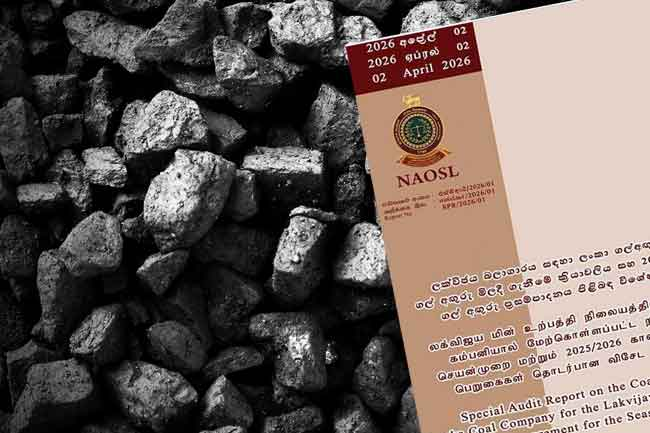
According to a special audit report dated April 2, 2026, weak procurement governance, lax supplier selection, and compromised quality assurance resulted in direct losses of Rs. 2,237.7 million. In addition, penalties amounting to Rs. 2,332.5 million have been identified as recoverable from suppliers.
The investigation reveals that procurement rules were bypassed at critical stages. Suppliers who had not completed mandatory registration requirements were allowed to bid, including the selected contractor. The audit also highlights that supplier qualification criteria had been significantly relaxed, enabling companies with a track record of delivering lower-grade coal to participate.
More troubling are the findings on quality control. Coal testing at the loading port relied on a non-accredited entity, raising serious doubts about the credibility of certification reports. Despite discrepancies between these reports and actual plant performance data, authorities failed to initiate verification actions.
The consequences were immediate and costly. Substandard coal, with lower calorific value than required, reduced power generation efficiency. As a result, more coal had to be burned to produce the same amount of electricity, driving up costs and creating inefficiencies across the system.
Operationally, the plant struggled to meet expected output levels, forcing reliance on alternativeand more expensive energy sources. The audit estimates that over 114 million additional kilowatt-hours may be required due to these inefficiencies.
The report also flags procurement planning failures. A critical import window was missed, and only 12 out of 18 expected shipments were received by March 2026. This shortfall triggered emergency purchases, including from previously underperforming suppliers.
With the Lakvijaya plant supplying up to 40% of the country’s electricity, these systemic failures pose a direct threat to national energy security. The audit warns that unless procurement systems, supplier standards, and testing mechanisms are urgently strengthened, similar losses and disruptions will persist.