




A groundbreaking petition filed by Hon. Justice A.H.M.D. Nawaz, a sitting judge of the Supreme Court of Sri Lanka, before the Karnataka High Court in India has ignited an intense debate within the international legal community. Seeking to compel Google to remove allegedly defamatory online content, this unprecedented legal maneuver is poised to set a critical precedent regarding cyber law, the “Right to be Forgotten,” and extraterritorial jurisdiction in the digital age.
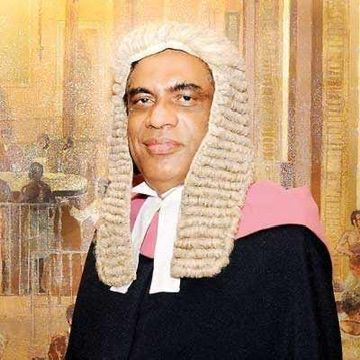
(A.H.M.D. Nawaz)
The Rationale for Seeking Foreign Jurisdiction
Why would a sitting judge of a nation’s apex court bypass his domestic legal system to seek recourse abroad? Justice Nawaz’s legal counsel has grounded this decision in a foundational legal maxim:
“Nemo judex in causa sua” (No one should be a judge in their own cause).
The primary objective is to circumvent any potential conflict of interest or ethical dilemmas that could arise from litigating within the very judicial institution where he currently serves. Furthermore, approaching the Karnataka High Court is both a strategic and logical step, given that Bengaluru houses the Indian operational headquarters of Google—the intermediary managing the globally accessible content in question.
Background of the Dispute: Allegations and Denials
The genesis of this legal battle traces back to a series of articles published across various online media outlets between 2015 and 2020. These publications leveled criticisms regarding:
- Alleged investigative associations during his tenure as a Deputy Solicitor General.
- Controversies surrounding his appointments in 2020 under the administration of former President Gotabaya Rajapaksa.
Justice Nawaz categorically denies these allegations. He maintains that throughout his distinguished judicial career, he has never been involved in, nor proven guilty of, any act of misconduct. His legal team characterizes the continued online presence of these unverified publications as a deliberate act of “international character assassination.”

(Karnataka High Court in India )
A New Legal Frontier: The “Right to be Forgotten”
The cornerstone of this case rests on the “Right to be Forgotten”—a globally evolving legal concept that empowers individuals to request the removal of false, outdated, or reputation-damaging information from search engine results. To substantiate this claim, Justice Nawaz’s counsel has constructed a robust legal framework:
- The Constitution of India: Invoking the ‘protection of life and personal liberty’ guaranteed under Article 21, and the ‘right to equality before the law’ under Article 14.
- International Law: Relying on the protection of honor and reputation as enshrined in the International Covenant on Civil and Political Rights (ICCPR).
The Jurisdictional Debate in the Karnataka High Court
During the preliminary hearings, Google and the Central Government of India raised a fundamental legal objection: “Does the Karnataka High Court possess the territorial jurisdiction to adjudicate this matter?”
Google’s Argument:
- The petitioner is a foreign national and an apex court judge of Sri Lanka.
- The content in question originated from sources within Sri Lanka.
- The primary respondent, Google, is a United States-based corporation.
- Entertaining this lawsuit could open the “floodgates,” burdening the Indian judicial system with global litigants seeking to weaponize Indian courts to censor content worldwide.
The Petitioner’s Rebuttal:
- The internet is inherently borderless. Because the defamatory content is freely accessible within India, it falls squarely within Indian judicial jurisdiction.
- Investigations have revealed that certain authors of the disputed articles currently reside outside Sri Lanka, in jurisdictions such as the United Kingdom.
- While Google operates as an intermediary, it cannot claim immunity under “intermediary liability” protections if it fails to take down harmful content after receiving formal legal notice.
Current Court Directives and Future Proceedings
Following the issuance of formal notices to Google and the Indian Government on March 5, the matter was heard by a single-judge bench presided over by Justice Sachin Shankar Magadum.
During the proceedings, the Court issued several key directives:
- Ordered the rectification of minor technical defects within the petition.
- Instructed the removal of the regional subsidiary, ‘Google India,’ from the lawsuit, clarifying that the parent company (Google LLC) is the appropriate respondent.
- Scheduled the next hearing for April 6, 2026.
Critical Analysis: A Crossroads for Global Cyber Jurisprudence
Justice A.H.M.D. Nawaz’s legal action represents more than a personal quest to vindicate his reputation; it stands at the complex intersection of “Freedom of Expression” and the “Right to Reputation.”
In an era where digital information crosses geopolitical borders instantaneously, the regulation of a largely unfettered cyberspace remains a profound challenge. By seeking justice from a neighboring state’s judiciary to protect his dignity, a high-ranking Sri Lankan judge is testing the very limits of extraterritorial jurisdiction. As the global legal and tech communities closely monitor this case, the Karnataka High Court’s eventual ruling could fundamentally reshape how cross-border digital defamation and privacy rights are adjudicated worldwide.