




In an exclusive interview with the Daily Mirror, JVP General Secretary Tilvin Silva outlines the current administration's departure from historical ideological confines. Declaring concepts like 'Indian expansionism' a thing of the past, Silva emphasizes a transparent and balanced foreign policy in a multipolar world, particularly in navigating relations with India and China. The interview also delves into the internal mechanics of the government, highlighting the clear separation between party operations and the state apparatus. Furthermore, Silva addresses practical administrative challenges, systemic red tape, and the government's stance on the delayed Provincial Council elections, offering a clear vision of a reality-based political approach.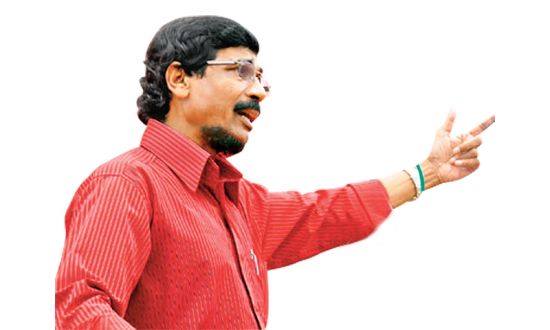
- We live in a different context today. Over the past three decades, the world has undergone profound transformation. Power blocs have shifted. India has changed. Sri Lanka has changed
- Provincial council elections will be conducted at the earliest available opportunity
- We do not dwell on the past. It is now a chapter of history that is nearly four decades old. We have had our experiences, and India has had its own
- No single decision maker in the party
- Janatha Vimukthi Peramuna (JVP) General Secretary Tilvin Silva, in an interview with Daily Mirror, takes questions regarding his first ever visit to India. He also responds to allegations about attempts to form one-party rule in Sri Lanka.
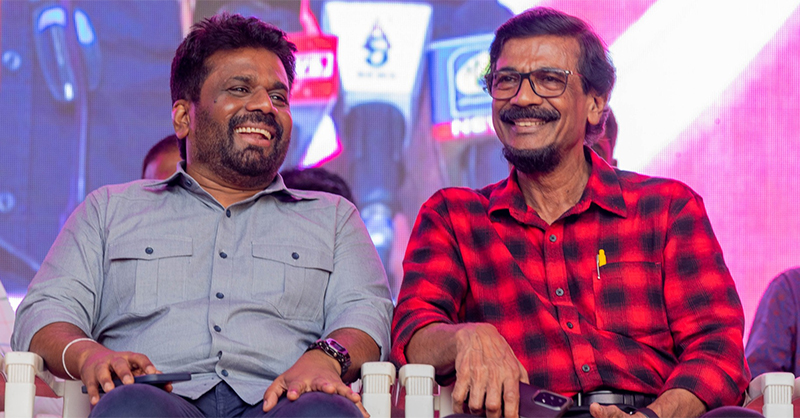
Excerpts: Q You travelled to India. You also visited Kerala state which is governed by a communist party. As someone believing in communist ideology, how impressed are you?We used to have links with the community party over there in the past. There are two communist parties in Kerala. We spent only one and half days there this time. It is too short for a deep study. We met the Chief Minister and others. Literacy level is 100 percent in Kerala. They are ready to help Sri Lanka as a whole, and to keep ties with us at party to party level.
Q Is there anything that inspired you there?As a whole, India is, anyway, making rapid strides in the area of technology. The IT sector has made great advancement. In all sectors, digitization is widely used. In Kerala, a high literacy level is unique. Both education and health services are free. Otherwise, it is a state more similar to Sri Lanka in general terms. They have developed a system that ensures the benefits of development are distributed across society.
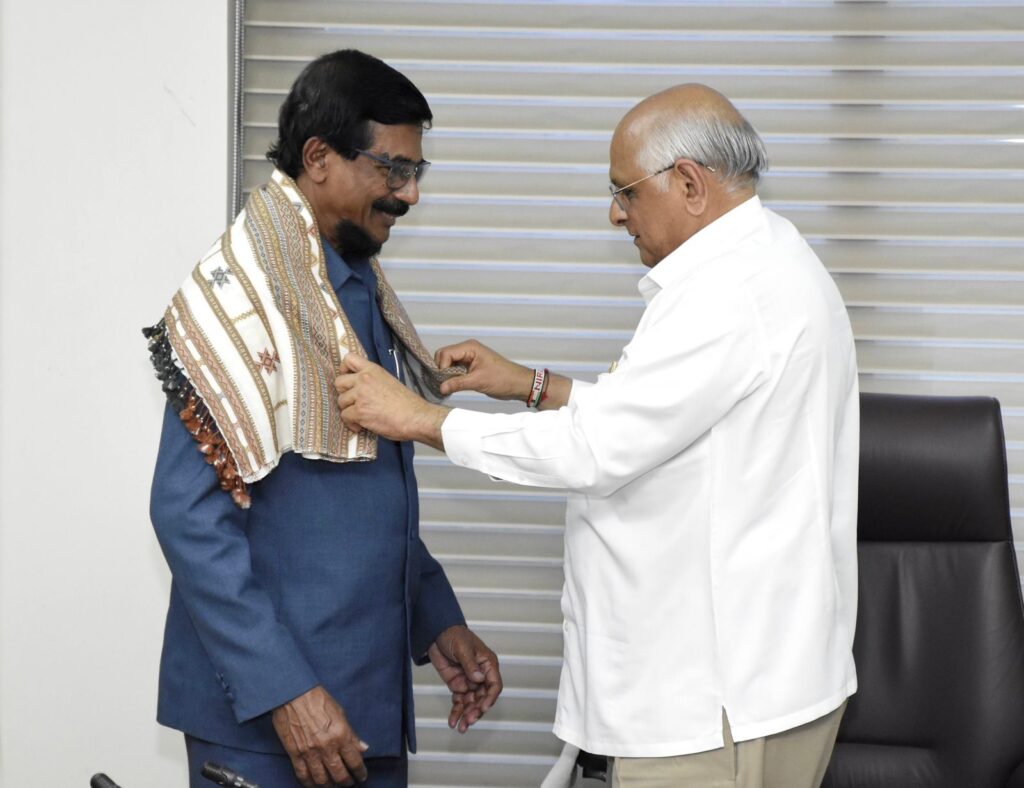
Q What did you basically discuss with Indian External Affairs Minister Dr S. Jaishankar?It is a cordial meeting. He assured us that India would remain a trusted friend of Sri Lanka. He laid emphasis on the words ‘trusted friend’. We also thanked him for all kinds of support during the time of cyclone Ditwah. He pledged to support Sri Lanka further in all possible sectors, depending upon Sri Lankan priorities.
Q Your party was a vociferous critic of India in the past. You talked about ‘Indian expansionism’. However, the Indo-Lanka ties have even reached new heights under the government led by your party. Have you changed your party viewpoint?This is a question that keeps being repeated. We do not dwell on the past. It is now a chapter of history that is nearly four decades old. We have had our experiences, and India has had its own.
We live in a different context today. Over the past three decades, the world has undergone profound transformation. Power blocs have shifted. India has changed. Sri Lanka has changed.
Any political movement will be rendered outdated if it cannot align with the changing circumstances. We, as a political movement, keep ourselves abreast with changes. India is our neighbour. We have only one neighbour. It is an economic powerhouse. We have historical, cultural ties. As such, it is always important for us to have close ties with India.
It should be a friendly, mutually respectful relationship. We have been able to shape it into one that is both mutually beneficial and respectful. One country should not be used against the interests of the other.

Q Your party was ideologically leaning more towards China. You have close ties with the Communist Party of China (CPC). How do you balance ties between the two powers now?These are two distinct countries. China is an economically powerful nation. India is also a major economic force. Culturally, too, the two countries are markedly different.
We have been able to maintain close ties with both countries without deceiving either and attempting to pit one against the other. Honesty is the best principle in the conduct of foreign policy. If we attempt to mislead these nations or play one against the other, we will not be able to sustain our relationships with them. We are transparent in our engagements. China knows that we maintain close relations with India. At the same time, India is fully aware of our ties with China.
In the recent past, we have observed a thaw in India–China relations. The Chinese Foreign Minister visited India, and Prime Minister Narendra Modi travelled to China. During our bilateral discussions, we did not observe India being critical of China.
We have maintained excellent relations not only with India and China but also with Pakistan. If that were not the case, it would not have been possible to host the Pakistani cricket team for that match.
This marks a new era in our foreign policy. We are respected by all. President Anura Kumara Dissanayake commands respect across the board. India understands that we remain firm when it comes to safeguarding our national interests. This indeed is a new chapter in our foreign policy.
Q Still, India raises security concerns regarding Chinese projects. At times, even commercial Chinese ventures are viewed by India through a strategic prism. How do you address this concern?We have not encountered such an issue, and we do not expect it to arise. We have taken a clear stand: nothing on our soil will be allowed to undermine India’s national security. At the same time, this does not prevent us from making decisions that promote our economic development. So far, no problems have emerged, and we hope none will arise in the future.
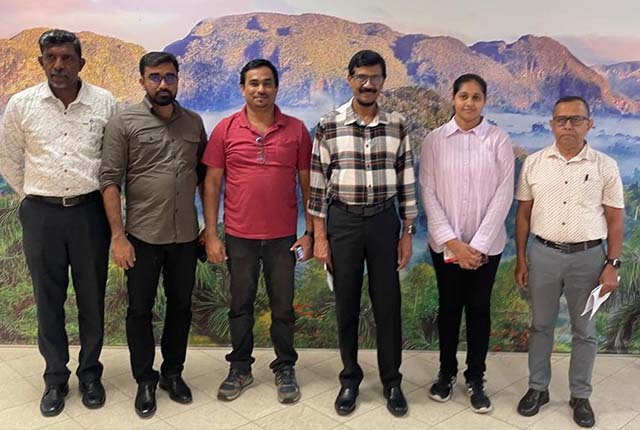
Q We are witnessing reduced Chinese involvement. Even the proposed US$3.7 billion investment by Sinopec has yet to materialise. There is still no clarity on China’s contribution to post-Ditwah reconstruction efforts. What is the reason for this?We do not see any issue in this regard. We maintain excellent ties with China, and the relationship between the JVP and the CPC is particularly strong. Our party activists undertake annual study tours in China, and I have participated as well.
In the aftermath of Ditwah, China extended assistance to us. Naturally, India, as a neighbouring country, also contributed. However, the amount of aid is not the measure we use to gauge the strength of our ties with any nation. We believe in maintaining broad-based relations with the world.
We enjoy strong relations with both economic giants—India and China—and we do not assess these relationships based solely on the volume of assistance received. To do so would be a narrow and selfish approach.
Q At the end of the day, our relationships should be mutually beneficial. What is the status of major Chinese investments, such as Sinopec and the Colombo Port City?The Colombo Port City project is now gaining momentum. Regarding Sinopec, there are some concerns in the agreement that we are in the process of resolving. We do not wish to act hastily. China provided significant assistance in the aftermath of Ditwah, including donating school uniform materials for this year.
Q The JVP was once the strongest critic of US involvement in Sri Lanka, decrying imperialism at the time. Yet today, US–Sri Lanka ties have reached new heights under a government led by the JVP. Isn’t that a political irony?We have to operate in the reality of the modern world. Some view things through the lens of a perspective that existed 50 years ago, when the world was divided into two power blocs—the Socialist camp and the Capitalist camp. Today, it is a multipolar world with multiple powerful countries.
We remain actively engaged with the US, conducting significant trade, which is absolutely essential. At the same time, we have not been subjugated; the US does not impose its will on us. We also maintain healthy relations with others, including the European Union and Britain.
It is a notable achievement that we are able to sustain constructive relations with all, while carefully balancing the applicable geopolitical equations.
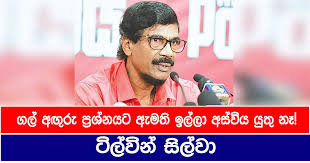
Q There is a perception that you are the key decision maker of this government. People say everything is decided by the party headquarters in Pelawatte. What is the actual position?Our party does not have any individual decision-maker. Decisions are taken collectively. The government’s functions are determined by the President and the Cabinet, while certain policy matters are decided by the NPP executive committee. The JVP politburo and central committee also play a key role in decision-making.
The JVP central committee and the NPP meet in Pelawatte. The NPP merely formed the government; it also meets in Pelawatte. Beyond this, no single person makes decisions unilaterally. Most people, however, view political processes through the lens of their own past experiences.
Historically, governments often functioned according to the dictates of a single leader. The UNP government in 1977, for instance, operated under the whims of J.R. Jayewardene. The same was true of the governments led by R. Premadasa, Chandrika Bandaranaike Kumaratunga, Mahinda Rajapaksa, and Ranil Wickremesinghe.
We are different from all of them. Those who served in previous governments assume that we operate in the same manner, which is why they often fail to understand us.
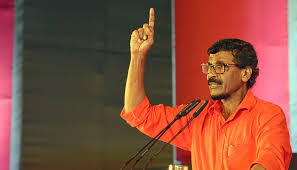
Q Earlier, you mentioned that the party operates independently of the government. In what ways does it function differently?The government is ours, but the state is not—it functions as usual. Those who work in the state machinery are not from the NPP. In Parliament, the NPP holds 159 seats, but the public service is not run by NPP members. We have not filled the public service with NPPers.
At the district level, NPPers and JVPers operate outside the state machinery and do not hold government positions. While it is true that the government is represented by NPPers, they are not involved in every aspect of governance. Instead, NPPers and JVPers carry out party activities independently, which is convenient for us. Historically, whenever parties formed governments, they often lost their party structures. We have managed to maintain both—our party and our government.
Q In the formulation and implementation of government policies, what is the role of the party?The government is ours. We only formed it and worked out its manifesto. Then, we have to get involved in the implementation of what is envisaged there. If any issue crops up, we only have to sort it out.
Q You are the General Secretary. In a community party structure, it is the most powerful position. General Secretary is the leader of the countries where communist rule is in place. What is your role here in governance?Ours is a party with a unique culture and structure. Some people fail to understand it, or perhaps pretend not to—that is hypocrisy. We do not use our positions to wield influence. I am the General Secretary, while Comrade Anura is the leader. We do not act arbitrarily or disregard our organizational structure. We do not impose our will on the party.
We are all simple, working together. When we dine together, we wash our own plates and serve ourselves. We assemble freely to discuss politics whenever we choose. My focus is on maintaining the organisation—helping to sustain the party while also contributing to the functioning of the government. I am not involved in state affairs.
Q What do you mean by state affairs?I have never spoken to a Ministry Secretary. I have not called the Inspector General of Police, nor have I contacted the Army Commander. Yet, if an issue arises, I discuss it with Comrade Anura. In emergencies, he calls me to explain the situation and the need to brief the party.
If anyone raises a concern regarding a Ministry, I ask Comrade Anura to look into it. This is how we collaborate. But the state is different—I do not meddle in its affairs.
Q You said the party does not exercise control over the State. Is that a barrier for you to reach targets?It is impossible for the party to capture the State. We cannot make it a party machinery completely. Nobody can do it. The State works in collaboration with us.
Unless the State had helped us, we could not have responded to cyclone Ditwah. Public Servants made a huge sacrifice. Gramasevakas did a lot of work.
However, several circulars have been in effect for an extended period, forming the basis of the current system. At times, these circulars can hinder service delivery in certain areas. No individual is at fault—it is simply the system in place. As a result, some delays occur in the execution of certain tasks.
We are now working to reform this system in coordination with the relevant authorities, and progress has been made. Many of the issues stem from existing circulars and the Establishment Code.
Q Is there any bureaucratic red tape?Yes. That is there. There are contradictions. There are certain procedures that have been in practice for an extended period. We also find a tiny percentage of people who are in cohort with the former rulers and try to scuttle our work. We have identified them.
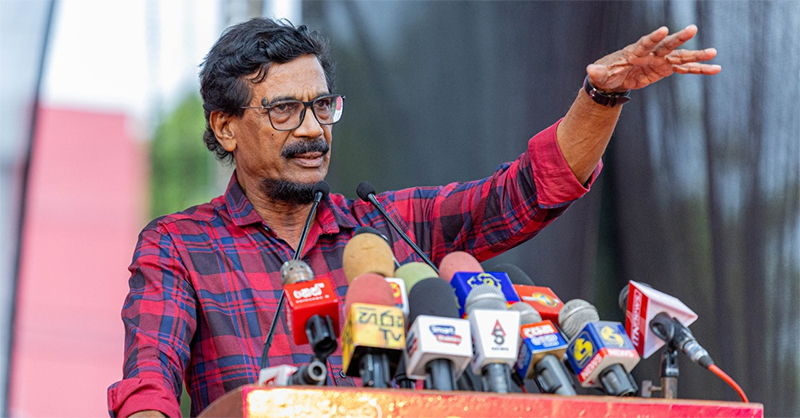
Q What is your stand on the Provincial Council elections?The answer lies in our manifesto where we have highlighted that a proper solution should be worked out to address the ethnic issue.
Provincial councils have not served the purpose. We should look for a better solution. Until such times, we should have provincial councils. We will not scrap them without finding alternative solution.
Today, we have been unable to reconstitute the provincial councils because of a law enacted during Mr. Ranil Wickremesinghe’s time. We had planned to conduct the elections to them this year. Yet, it is impossible this because of reasons such as cyclone Ditwah. The elections should be held at the earliest possible opportunity. But, the question remains how. There is no law which provides for the conduct of it. We have to do delimitation. We have to think whether we should go for delimitation or not. A committee has been appointed to look into it.
#Dailymirror