




by a special correspondent
The prolonged standoff surrounding the Ambuluwawa cable car project has raised serious concerns about investor protection and regulatory consistency in Sri Lanka, with developers warning that arbitrary State actions may force the country’s first cable car venture to collapse entirely.
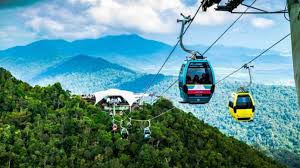
Developed under the Amber Adventure brand with technical expertise from China Machine-Building International Corporation, the USD 12.75 million project was secured during Sri Lanka’s 2022 economic crisis a period marked by historically low investor confidence.
A consortium of Sri Lankan, American, and Chinese investors undertook the project under a Build-Operate-Transfer (BOT) model, absorbing 100 percent of financial, technical, and operational risks.
Under the agreement with the Board of Investment (BOI), the consortium would construct and operate the cable car system for 13 years three years of construction and ten years of operation before transferring a completed system valued at over Rs. 5 billion to the Government free of charge.
However, the project has now been suspended following a directive issued by the Central Environmental Authority (CEA) on January 9, 2026.
In a letter to BOI Director General Renuka Weerakone, Amber Adventure Director Huang Yuping stated that the CEA ordered all work halted based on written and verbal complaints, including claims circulating on social media, pending a site inspection. The company described the suspension as unlawful, noting that approximately USD 3.5 million had already been invested.
Amber Adventure insists it secured all required approvals, including from the CEA, Urban Development Authority, Cabinet of Ministers, and Ministry of Defence, and complied fully with BOI guidance. Despite this, the company alleges persistent harassment and obstruction by State officials without legal basis.
One high-profile incident involved the Udapalatha Divisional Secretary, whose allegations of unauthorised excavation led to criminal proceedings. In a landmark ruling (CA WRIT 656/2024), the Court of Appeal reprimanded the official for acting maliciously and abusing her office, ordering her to personally pay Rs. 100,000 in costs to the company.
The company has also rejected claims that construction caused landslides, stating that the National Building Research Organisation (NBRO) confirmed the stability of all three construction sites following Cyclone Ditwah. Amber Adventure argues that halting the project based on unverified claims reflects a breakdown of Sri Lanka’s regulatory framework.
Financial scrutiny has further complicated the issue. According to the Auditor General’s 2024 report, contracts were awarded without competitive tenders, Rs. 93.15 million was paid through undocumented vouchers, and 37 percent of a Rs. 250.36 million infrastructure estimate has already been spent by the Trust managing the site.
Amber Adventure has warned that continued obstruction could trigger legal action and a complete withdrawal, including claims for restitution of losses. The company also expressed concern over potential termination of the Crown Grant for project land, calling it politically motivated.
As legal battles and investigations continue, the Ambuluwawa impasse risks sending a chilling signal to future investors undermining Sri Lanka’s recovery narrative at a time when economic stability depends heavily on foreign investment.