




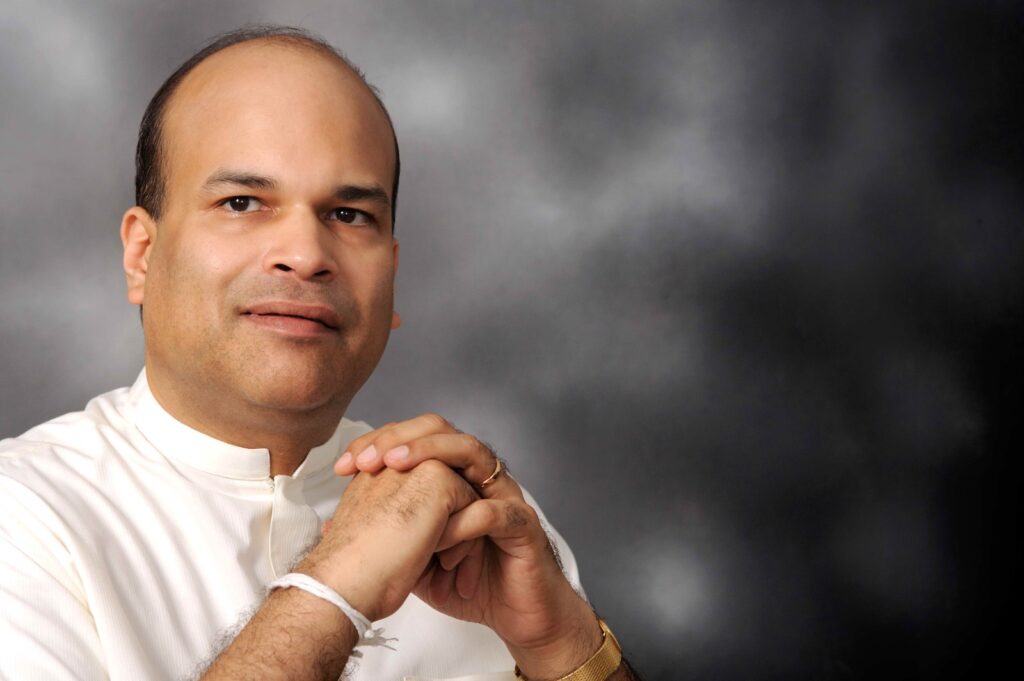
By Milinda Moragoda
India was not overlooked when the United States chose Pakistan as a facilitator in negotiating the recent two-week ceasefire. It was bypassed—for a reason.
The debate in New Delhi over “why not India?” misses the larger point. It reflects a lingering tendency to view global events through a regional or status lens, rather than through the harder logic of great power politics.
That logic is now unmistakably shaping the emerging world order.
We are moving toward a system defined by a handful of major powers—the United States, China, India, and possibly Russia—alongside a European Union that remains an economic and regulatory heavyweight despite its internal complexities. In such a system, relationships are no longer linear. Countries engage each other simultaneously as partners, competitors, and, when necessary, rivals.
Recent remarks by U.S. Deputy Secretary of State Christopher Landau at the 2026 Raisina Dialogue should be read in this context. While affirming the importance of expanding economic ties with India, he made it equally clear that Washington would do so while protecting its own national interests. His reference to avoiding past “mistakes” with China was particularly telling—it signalled that the United States will not support India’s rise in ways that could eventually challenge American economic primacy.
In other words, India has arrived at the “big boys’ table”—and at that table, sentiment gives way to strategy.
India today is no longer merely a regional actor. As the world’s most populous country, a leading economic power, a major military force, and an aspirant to permanent membership in the UN Security Council, it occupies a fundamentally different position. This elevation brings opportunity—but also a more complex engagement with the United States, marked by cooperation in some areas and competition in others.
Nowhere is this complexity clearer than in the shifting geopolitics of energy and supply chains. The tensions involving Iran are not just about regional stability; they are also about influence over energy flows, logistics corridors, and financial systems. As the world’s third-largest consumer of petroleum, India is deeply exposed to these dynamics.
But India’s stakes extend well beyond energy. Its growing role in technology, digital infrastructure, pharmaceuticals, manufacturing, and global services places it at the heart of multiple strategic sectors that will define the next phase of globalisation. Increasingly, this also includes artificial intelligence, robotics, nuclear energy, and control over critical minerals—areas central to the future distribution of economic and strategic power. In each of these domains, India is not only a partner to major powers like the United States—it is also an emerging competitor.
Against this backdrop, Pakistan’s role as a facilitator—rather than a mediator—becomes easier to understand. For Washington, Islamabad remains a useful, if limited, tactical instrument in specific geopolitical situations. Expecting the United States to reassign such roles based on India’s rising status misunderstands the fundamentally transactional nature of great power behaviour.
India’s response, therefore, must be calibrated at a higher level.
Rather than reacting to individual diplomatic choices, India’s larger opportunity lies in shaping the agenda of the emerging order. As a leading voice of the Global South, with significant human capital and growing technological and economic weight, India is well-positioned to influence the evolving architecture of energy, finance, technology, and global governance—working not only with the United States and China, but also with the European Union, Japan, and other key middle powers.
The scale of global disruption—from West Asia to Europe, and across the technological domain—suggests that the rules of the system are being rewritten in real time. India has both the capacity and the strategic space to help shape those rules. But a seat at the top table comes with a cost: constant scrutiny, competition, and pressure to deliver.
Managing relations with the United States will, therefore, remain a delicate exercise. Both countries need each other in the present moment, yet their long-term trajectories ensure periodic divergence. Alignment will be selective, not automatic. Friction will be structural, not accidental.
While Graham Allison’s “Thucydides Trap” often frames global politics as a contest between a rising China and the established United States, the real world is far more complex. This complexity—marked by multiple rising powers, shifting alliances, and sectoral competition—creates both challenges and opportunities for countries like India, which can manoeuvre, shape outcomes, and avoid being locked into rigid blocs.
Doing so will require strategic clarity, patience, and diplomatic agility—qualities that India’s current foreign policy establishment has increasingly demonstrated.
Winston Churchill once observed that Americans will always do the right thing—only after they have tried everything else. Many today may question whether that still holds in a more polarised and unpredictable world. Yet the underlying insight remains relevant: U.S. policy may fluctuate tactically, but it is consistently anchored in the pursuit of national interest.
For India, the lesson is straightforward. At the top table, relevance is not assumed—it is constantly tested, negotiated, and re-earned.
Milinda Moragoda is a former Sri Lankan Cabinet Minister and diplomat from Sri Lanka. He has served as Sri Lanka’s High Commissioner to India in the past. He is the founder of the Pathfinder Foundation, a strategic affairs think tank can be contacted via [email protected]. this article published Wionews.comon2026.04.11 https://shorturl.at/D3hMV