




: A Clash Between Policy and Reality?
For a tropical nation like Sri Lanka, blessed with year-round sunshine, solar energy is the most natural and cost-effective solution to the country’s energy crisis. It offers a clear path to reducing dependence on costly, imported fossil fuels like coal and oil. However, a closer look at the current administration’s energy policies reveals a startling contradiction between official Cabinet decisions and the harsh reality on the ground.
The Cabinet’s “2030 Fantasy”
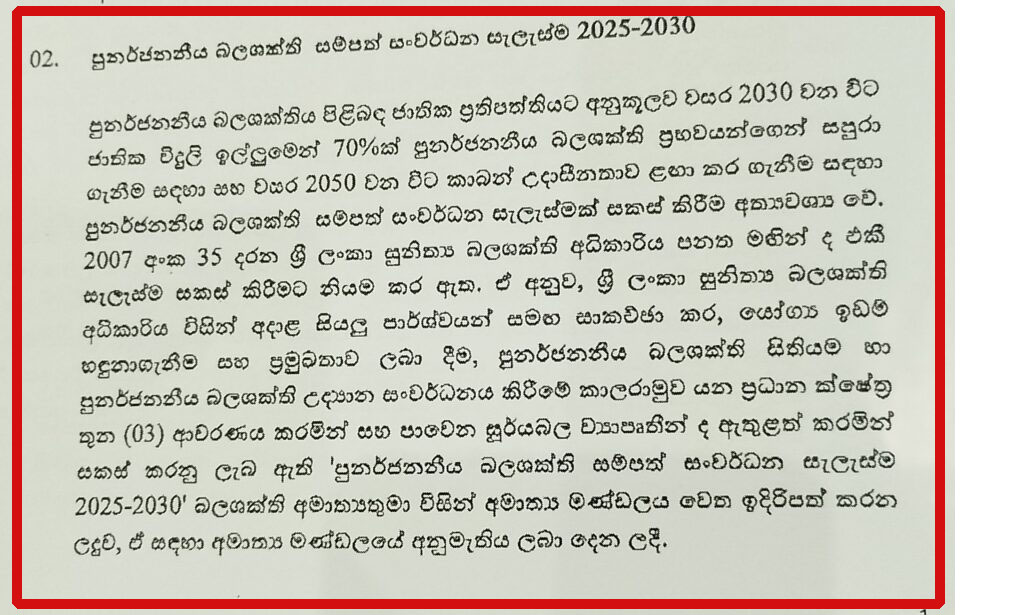
The government recently granted Cabinet approval for the “Renewable Energy Resource Development Plan 2025–2030.” The stated goals are ambitious: meeting 70% of national electricity demand with renewable sources by 2030 and achieving carbon neutrality by 2050. The blueprint paints a rosy picture of renewable energy parks, floating solar projects, and a green future. Theoretically, this is a progressive step aligning with global trends.
Ground Reality: An Industry in Collapse
While the Cabinet dreams of the future, the present reality is dismantling the very industry needed to build it. The government’s rigid stance on rooftop solar systems has plunged the sector into an unprecedented crisis.
The core issue lies in the drastic and unjust 40% slash in the Feed-in Tariff (the rate paid for solar power added to the national grid), which has dropped from Rs. 37 to Rs. 27 per unit. With rumors circulating about further reductions, the consequences are severe:
- Investors in Debt: Individuals and businesses that took bank loans to install solar panels, trusting previous policies, can no longer generate enough revenue to service their debts.
- Banking Crisis: Banks that financed these green initiatives are now facing a wave of non-performing loans as borrowers default.
- Livelihoods at Risk: The sector, which employs over 40,000 people directly and supports nearly 1,000 Small and Medium Enterprises (SMEs), faces an existential threat.
The IMF Pretext and the Consumer Burden
The government has justified hiking electricity bills for the general public, citing conditions laid out by the International Monetary Fund (IMF) to cover the Electricity Board’s losses. Yet, ironically, while extracting more from the consumer, the administration is aggressively cutting payments to local solar producers who provide the cheapest source of power.
Furthermore, religious institutions such as temples, which previously received state support for electricity, are now burdened with heavy bills. Although many have been equipped with solar panels, the new unviable tariff rates mean they can no longer rely on solar earnings to offset their consumption.
The Shadow of the Fossil Fuel Mafia?

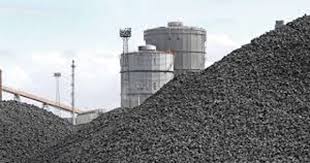
Why is the government actively discouraging rooftop solar while seemingly pivoting back to coal and oil? In a global context where nations like China and India are extending aid to promote solar energy, Sri Lanka’s continued preference for dollar-draining fossil fuels raises serious questions.
Is this policy shift driven by a geopolitical agenda to please regional powers through coal purchases? Or is it sustained by a “commission culture” that thrives on massive imported fuel contracts, which is absent in decentralized solar power generation?
Conclusion
It is easy to ratify a document promising “70% renewables by 2030.” But if the local entrepreneurs and investors capable of delivering that goal are driven to bankruptcy today, who will build that future?
The government must look beyond simple mathematical formulas and consider the broader economic and social survival of the sector. Sri Lanka needs stable, fair, and predictable policies that plant seeds on the ground, not just dreams on paper. If the current trajectory continues, the country risks losing its renewable energy capacity entirely, trapping itself in a cycle of fossil fuel debt for decades to come.