




The removal of Air Chief Marshal (Retd.) Harsha Abeywickrama as the Chairman of Airport and Aviation Services (Sri Lanka) Ltd (AASL) is a stark reminder that in Sri Lankan politics, “system change” is often nothing more than a convenient slogan. While Minister of Ports and Civil Aviation Anura Karunathilaka frames the removal as “administrative restructuring,” the sequence of events points to a much darker reality: the victimization of a principled official who refused to bypass national and international security laws for political interests.
Principles vs. Privilege
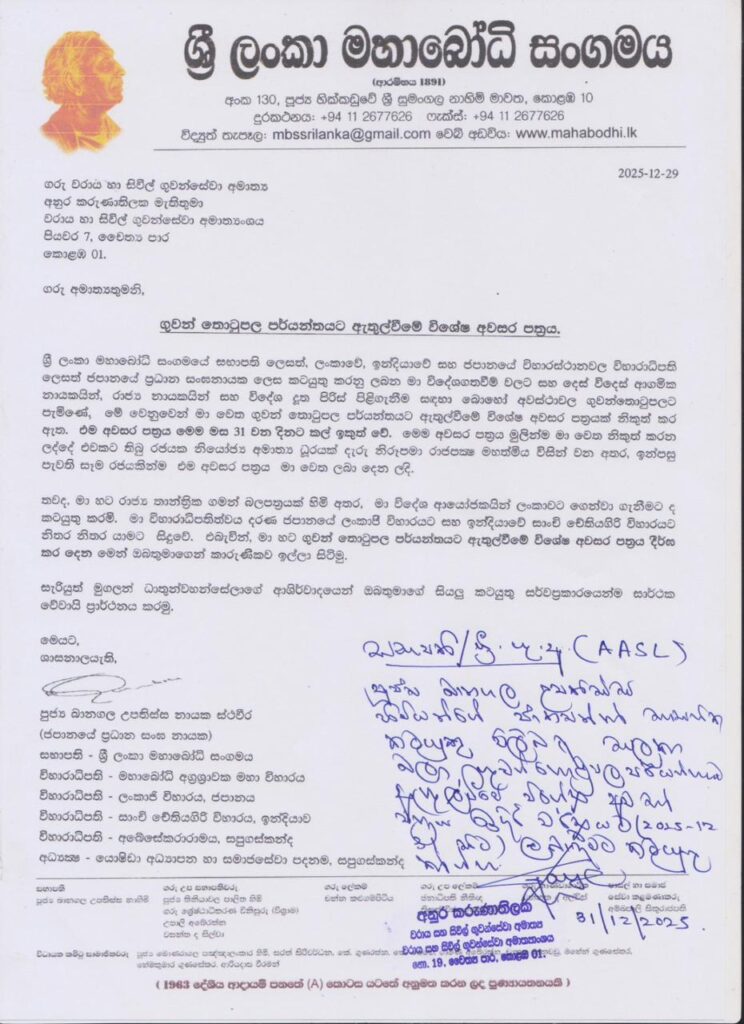
The conflict stems from a request by Ven. Banagala Upatissa Thero for a special Security Pass to the airport’s restricted zones. Under the Civil Aviation Act No. 14 of 2010 and ICAO Annex 17, access to Security Restricted Areas (SRA) is strictly reserved for passengers with valid tickets and personnel with authorized security clearance for official duties.
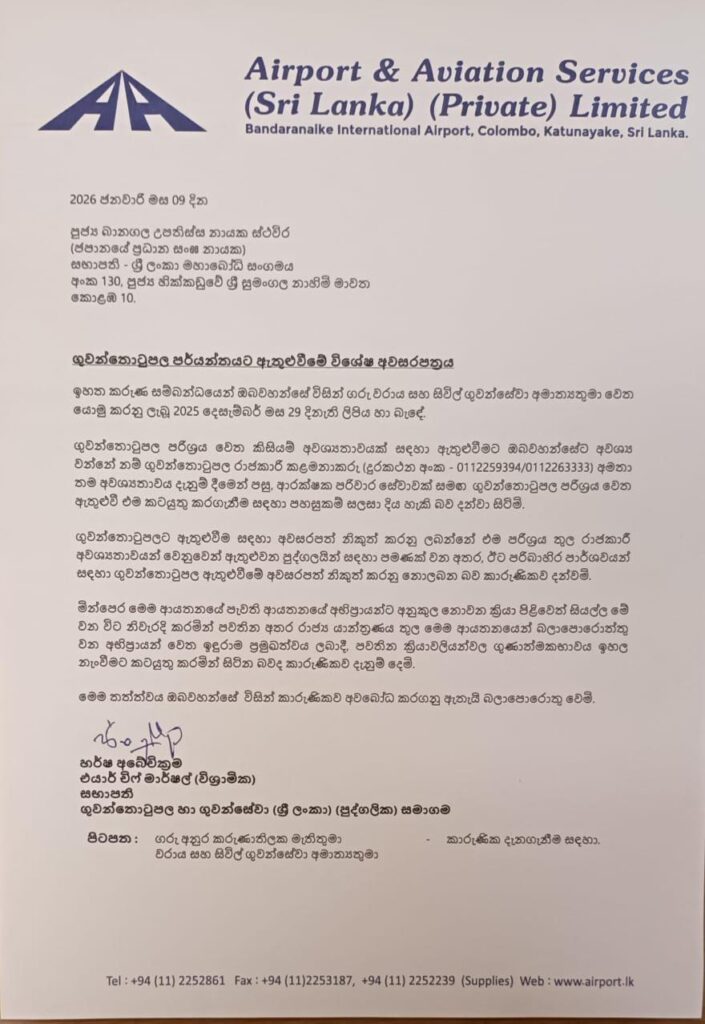
Chairman Abeywickrama, in his letter dated January 09, rightly pointed out that issuing such passes to non-official personnel violates international safety protocols. In any functioning democracy, such a stance would be commended. Instead, the current administration chose to appease influential figures over upholding the law.
Deconstructing the ‘Restructuring’ Myth
The Minister’s claim that this change was part of a planned internal discussion in January holds little water. To remove a high-ranking official within two weeks of him standing his ground against an unauthorized request is not “restructuring”—it is “retribution.” It sends a chilling message to all public officials: Follow the law at your own peril; follow political orders to survive.
Power Over Justice
The administration led by Anura Kumara Dissanayake came to power promising to end the “VIP culture” and ensure the equality of law. However, by sacrificing a professional like Abeywickrama to avoid upsetting religious or political factions, the government has proven that it is no different from its predecessors.
The exit of law-abiding officials from key state positions is a dangerous trend. It suggests that the current leadership is more interested in consolidating power than in genuine reform. If the “new” system only rewards those who bow to lawlessness, then the promise of a better Sri Lanka remains a distant dream.