




—An Investigative Analysis
A National Catastrophe and International Support
Sri Lanka is currently grappling with a severe natural disaster following the impact of Cyclone "Ditwah." As torrential rains, widespread flooding, and landslides displace thousands, the international community has stepped forward to offer urgent support. However, within this humanitarian response, the unfortunate intrusion of the enduring India-Pakistan geopolitical friction has become evident. While regional allies like Pakistan have been quick to mobilize assistance, this critical aid process has regrettably been overshadowed by political controversy.The “Expired Bag” Allegation and Media Controversy
The controversy was ignited when the Indian news channel WION aired a report accusing Pakistan of delivering “expired” humanitarian aid to Sri Lanka. The report highlighted an expiration date marked “EXP 10/2024” printed on one of the aid bags.
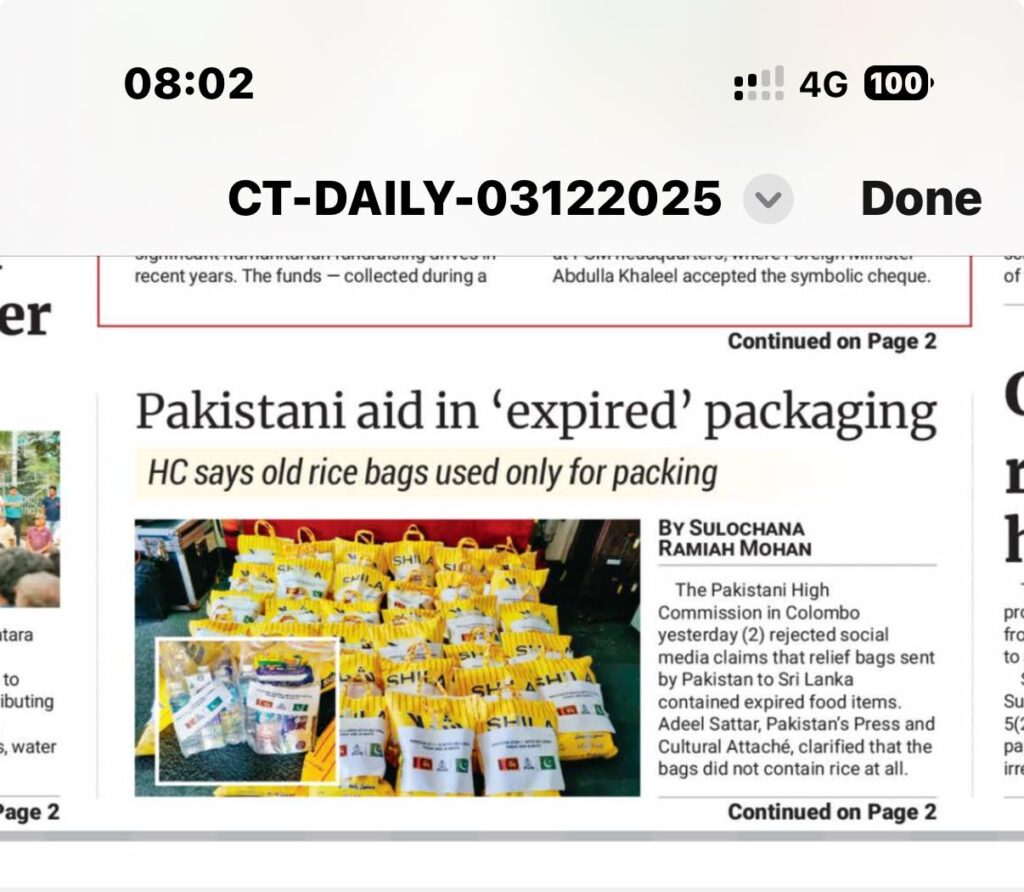
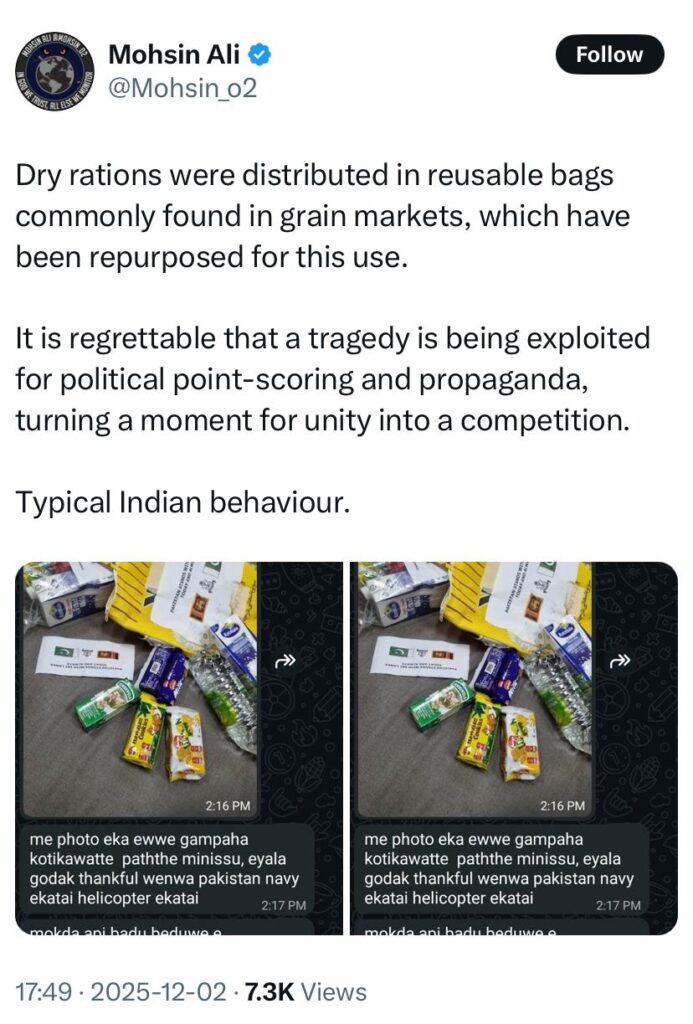
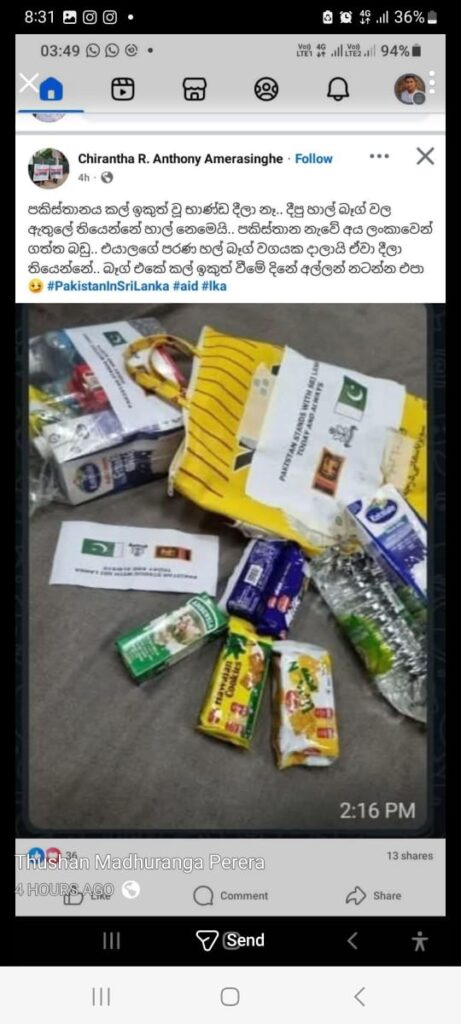
In response, the Pakistan High Commission in Colombo and Pakistan Navy sources moved quickly to clarify the true situation. They explained that the bags were reused packaging from a backlog of items present on a Pakistan Navy vessel docked in Colombo for an exercise. Crucially, the items inside the bags were not imported from Pakistan; they were fresh, essential goods (such as soap, toothpaste, sanitary items, biscuits, and milk) purchased locally in the Sri Lankan market and immediately packed into the available clean bags. Photos circulating on social media clearly confirmed that the contents included local Sri Lankan brands like Maliban biscuits, validating the High Commission’s statement. Pakistani officials argued that using readily available, clean packaging for locally procured goods was a practical solution to ensure rapid distribution during the crisis.
Geopolitical Rivalry: The Overflight Clearance Issue
Beyond the packaging dispute, a more serious geopolitical concern emerged regarding the logistics of aid delivery. Pakistan accused India of deliberately delaying the overflight clearance for the Pakistan Air Force C-130 aircraft (PAAF266) carrying search and rescue teams, claiming the process was stalled for two days. Pakistan alleged that, despite submitting all necessary documentation, Indian authorities repeatedly requested re-submissions of the flight plans, branding the delay as politically motivated obstruction intended for “political point-scoring” during a humanitarian crisis.
India, however, countered this accusation. The Indian High Commission maintained that clearance for the Pakistani C-130 aircraft to use Indian airspace was granted on December 1st at 6:00 PM, and official communication was duly conveyed to Islamabad.
The Official Scope of Pakistan’s Relief Efforts
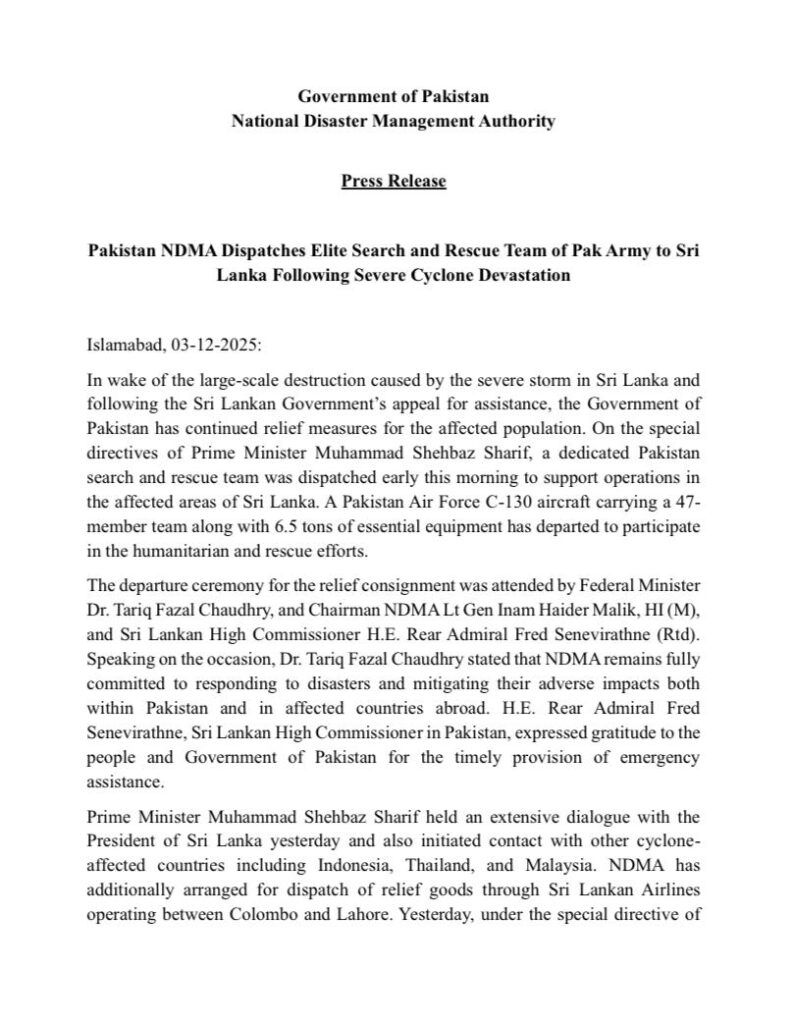
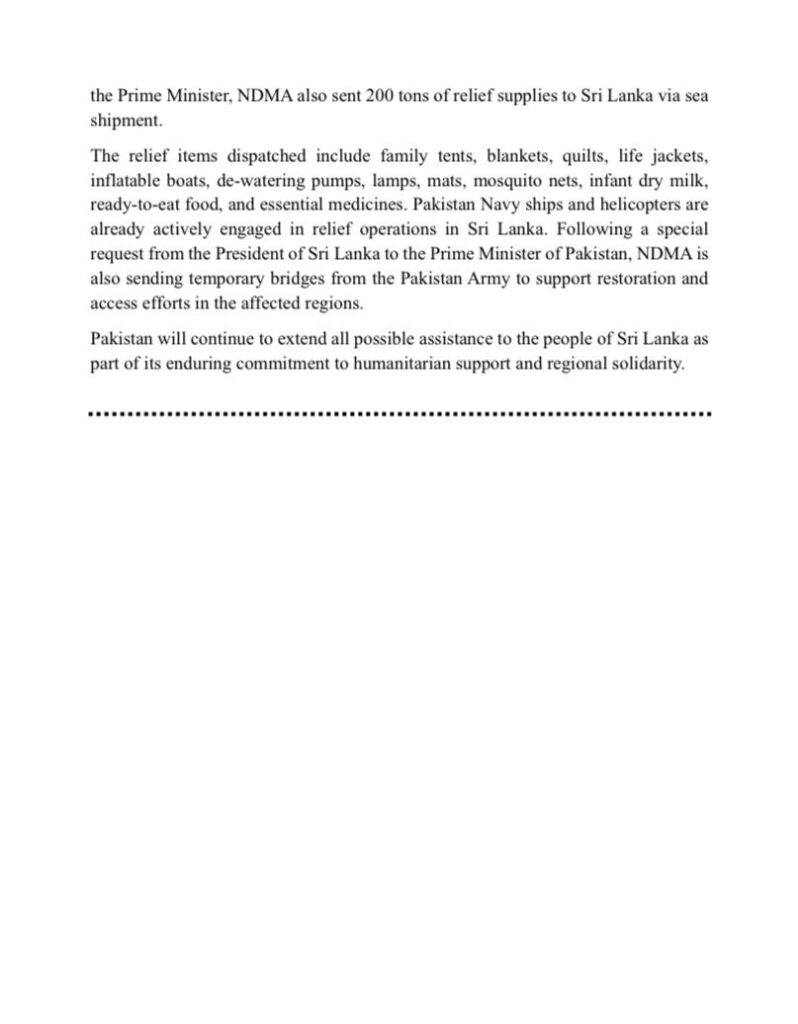
Despite the political noise, the Government of Pakistan proceeded with a comprehensive relief program managed through its National Disaster Management Authority (NDMA), as detailed in its December 3rd Press Release. Key actions included:
- The deployment of an elite 47-member Pakistan Army Search and Rescue team via the C-130 aircraft, carrying 6.5 tons of specialized equipment.
- The dispatch of an additional 200 tons of essential relief supplies (including tents, blankets, infant dry milk, ready-to-eat food, and medicines) via sea shipment.
- Pakistan Navy ships and helicopters are actively engaged in the ongoing relief operations.
- Following a special request from the Sri Lankan President, the NDMA is also sending temporary bridges from the Pakistan Army to support the restoration of access to cut-off areas.
Conclusion and the Challenge to Journalistic Ethics
The situation surrounding the Cyclone Ditwah relief effort clearly demonstrates how even an act of humanitarian assistance can become a battleground for the long-standing geopolitical rivalry in the region. The current climate is marked by Pakistan accusing India of unnecessary delays, which India officially denies. Simultaneously, the sensationalized “expired aid” narrative propagated by WION—a seemingly responsible international news channel—was swiftly refuted by facts on the ground, highlighting the difference between the bags and their contents.
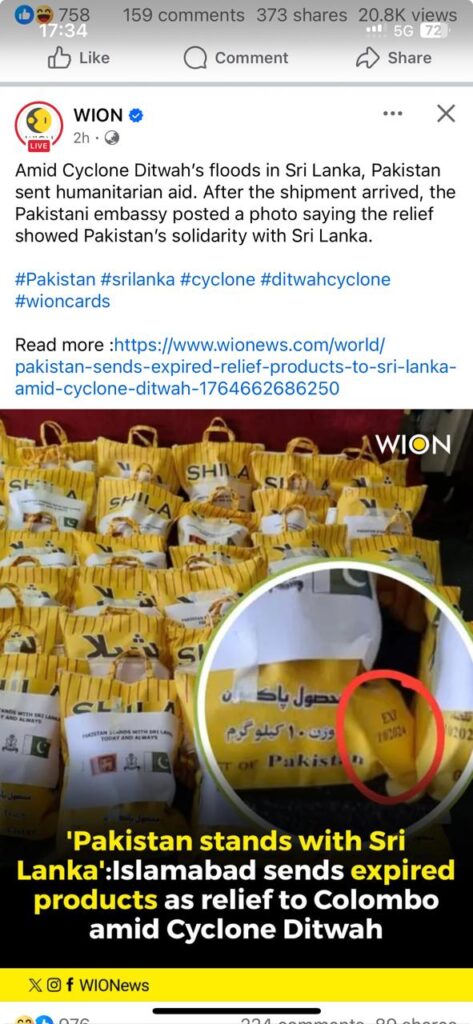
In the face of a national calamity, the willingness of a responsible media organization like WION to use unverified, contextually misleading visuals for the purpose of narrow political gain (political point-scoring) represents a concerning breakdown of journalistic ethics. The entire controversy diverts attention from the genuine suffering of the displaced people of Sri Lanka, who are the true victims in this scenario. This incident serves as a stark reminder that both regional powers and media organizations must prioritize humanitarian integrity and cooperation over political rivalry during times of crisis.