




(By a Special Correspondent)
The article discusses a major reform initiative by the Sri Lankan government to revitalize the local film industry. The key plan is to repeal the 1971 Sri Lanka National Film Corporation (NFC) Act and replace it with new legislation establishing the Sri Lanka National Film Council.

The primary goal of this move is to shift the state's role from a business competitor and distributor to a regulatory and promotional body. Stakeholders have long blamed the NFC's five-decade monopoly on film distribution and import for the industry's decline, citing a lack of quality content that drove patrons away.

Proposed Change: Establishment of the Sri Lanka National Film Council to regulate and promote cinema, focusing on areas not covered by the old law.

Industry Issues: Exhibitors criticize decades-old restrictions, particularly the rigid quota system limiting film imports, which they believe is crippling the Rs. 10 billion industry.

Current Context: Despite past turmoil (insurrections, war, bombings), Sinhala cinema is currently thriving, with box office revenues exceeding Rs. 1.5 billion in the first half of 2025 (compared to Rs. 7 million in 2024). Several films have recently earned over Rs. 200 million each.

Investor Warning: Private investors are building new multiplexes but warn that without full regulatory reform and liberalizing film distribution, growth will stall.

Stakeholder Demand: Industry stakeholders are urging the government to fully liberalize film distribution, allowing private sector involvement without bureaucratic constraints, and limiting the NFC's role strictly to regulation.

End of Monopoly Era: New Film Council to Liberate Lankan Cinema
The government is to set up Sri Lanka National Film Council with the aim of modernising the film industry and shift the state’s five decade role from a business competitor to a regulatory and promotional body.
With the objective of creating a strategic orientation with regard to the sectors that are not covered by the Sri Lanka National Film Corporation, fundamental draft bill has been prepared in relation to the structure and role of the proposed Film Council.

The Sri Lanka National Film Corporation Act No. 47 of 1971 will be repealed and replaced with new legislation to establish the Sri Lanka National Film Council.
It will provide a strategic direction for areas not covered by the old law and focus on regulating and promoting cinema culture. Industry stakeholders have long called for the NFC to be a regulator, not a competitor.
However, exhibitors argue that decades-old restrictions particularly the rigid quota system limiting film imports are crippling the Rs. 10 billion industry.
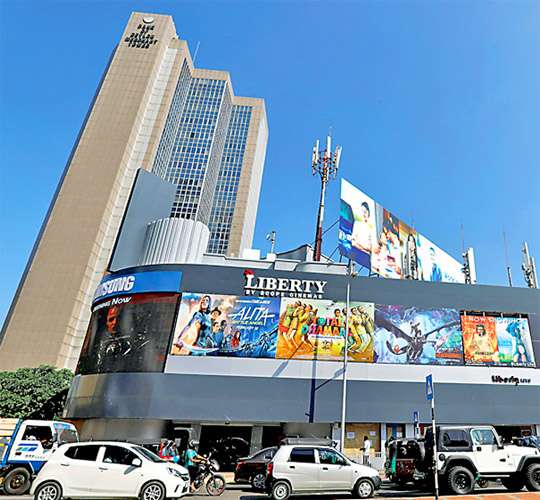
Sinhala cinema is thriving at present, with six films this year earning over Rs. 200 million each. Box office revenues have already surpassed Rs. 1.5 billion in the first half of 2025, compared to just Rs. 7 million in 2024.
Private investors are building new multiplexes in cities such as Kandy and Galle, but warn that without regulatory reform, growth will stall, they said.
Although the, 1971, 1987-1889 insurrections, three decade North East war and other minor revolts including Easter Sunday bomb attacks exerted impact on the industry, NFC’s monopoly in distribution and import of films has caused the down fall of the industry , industry stake holders alleged.
As corporation was the sole distributer of films no good content was provided to cinemas resulting in patrons moving away from film going culture that was once very vibrant in the country.

When distribution partially liberalized in 2001 ., four private film distribution circuits Lanka Film Distributors Ltd. (LFD), E.A.P. Films and Theatres Ltd. (EAP), Movie Producers and Importers Ltd. (MPI), Cinema Entertainment Ltd. (CEL) entered the market in addition to the NFC have been permitted to import and distribution of films.
They urged the government to limit the NFC’s role to a regulatory body and to fully liberalise film distribution, allowing for private sector involvement without bureaucratic constraints.