




Sri Lanka’s state-owned Ceylon Shipping Corporation (CSC) is facing one of the most serious governance and financial crises in its history, with Parliament’s Committee on Public Enterprises (COPE) exposing years of poor investment decisions, weak management, mounting debt and suspected financial irregularities that have pushed the corporation toward a comprehensive restructuring.
The parliamentary review, conducted under the chairmanship of MP Nishantha Samaraweera, examined Auditor General’s reports covering 2021 to 2023 and painted a troubling picture of an enterprise struggling to remain financially viable.
Among the most alarming findings was CSC’s investment of Rs. 630 million in six subsidiary and associated companies that yielded only around Rs. 400,000 in annual dividends—raising serious questions over investment oversight and corporate governance.
COPE also found that the corporation continues to carry an outstanding US$47 million debt from a US$70 million loan secured in 2016 to purchase two dry-bulk vessels. Officials attributed the financial burden to rising operational expenses, maintenance costs and insufficient revenue generation, forcing the loan to be restructured.
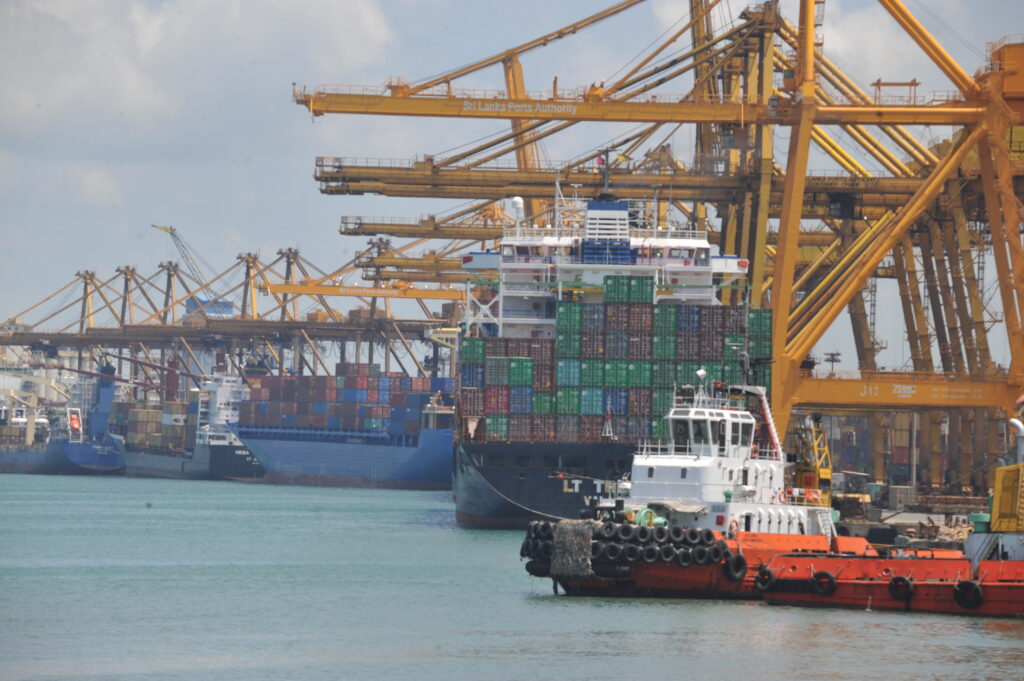
The committee noted that CSC’s annual revenues have consistently remained below Rs.4 billion, leaving the corporation unable to absorb substantial exchange rate losses and mounting interest payments.
Governance failures were another major concern. Several key leadership positions, including that of General Manager, have remained occupied by acting officials for prolonged periods, a situation COPE said has undermined effective decision-making. The committee further criticised the corporation’s Corporate Plan for 2024–2027, describing it as impractical and apparently prepared merely to satisfy administrative requirements rather than serve as a realistic operational strategy.
The inquiry also uncovered unresolved operational irregularities. COPE was informed that no formal investigation had been launched into the disappearance of 1,852 litres of lubricating oil from the vessel Ceylon Breeze. Separately, losses amounting to Rs.1.4 million were reported in a school uniform fabric distribution project, while a further Rs.6.3 million remains unrecovered.
Further scrutiny fell on the ship management agreement with Singapore-based Wallem Shipping, which has managed CSC’s vessels since 2016. COPE observed that the agreement failed to achieve expected revenue targets and lacked penalty clauses to address underperformance. The current agreement is scheduled to expire in September 2026, after which the corporation plans to introduce a new operating model using six registered direct brokers to reduce intermediary costs and strengthen direct access to international shipping markets.
As part of the National People’s Power Government’s broader policy of reforming State-Owned Enterprises without privatization, COPE has directed that CSC undergo a full restructuring. The committee also recommended that alleged financial irregularities be referred to the Criminal Investigation Department (CID) or the Commission to Investigate Allegations of Bribery or Corruption (CIABOC), where appropriate.
The restructuring is expected to align with a new State-Owned Enterprise legal framework being developed with World Bank support, introducing tighter controls over public assets, restrictions on foreign currency borrowing and mandatory merit-based appointments—measures aimed at restoring accountability to one of Sri Lanka’s most troubled state enterprises