




Sri Lanka is preparing to introduce its first-ever national policy on inbound labour migration, signalling a dramatic shift in the country’s labour and economic strategy as thousands of local workers continue to leave the island in search of better opportunities abroad.

The Cabinet this week approved plans to draft a comprehensive framework to regulate the recruitment, employment, and monitoring of foreign workers entering Sri Lanka. The decision comes at a time when several industries are grappling with severe shortages of skilled and semi-skilled labour due to the accelerating outflow of Sri Lankan workers.
For decades, Sri Lanka’s labour migration policies focused almost entirely on sending workers overseas particularly to the Middle East where domestic workers, drivers, construction labourers, and technicians formed the backbone of the country’s migrant workforce. Today, however, the Government is being forced to confront a new reality: businesses inside Sri Lanka are struggling to find workers as migration levels continue to rise following the economic collapse of 2022.
Foreign Minister Vijitha Herath, addressing the weekly post-Cabinet media briefing, acknowledged that the country’s labour market dynamics are rapidly changing. He said there is increasing demand from industries seeking foreign employees with specialised expertise and technical skills that are becoming scarce locally.
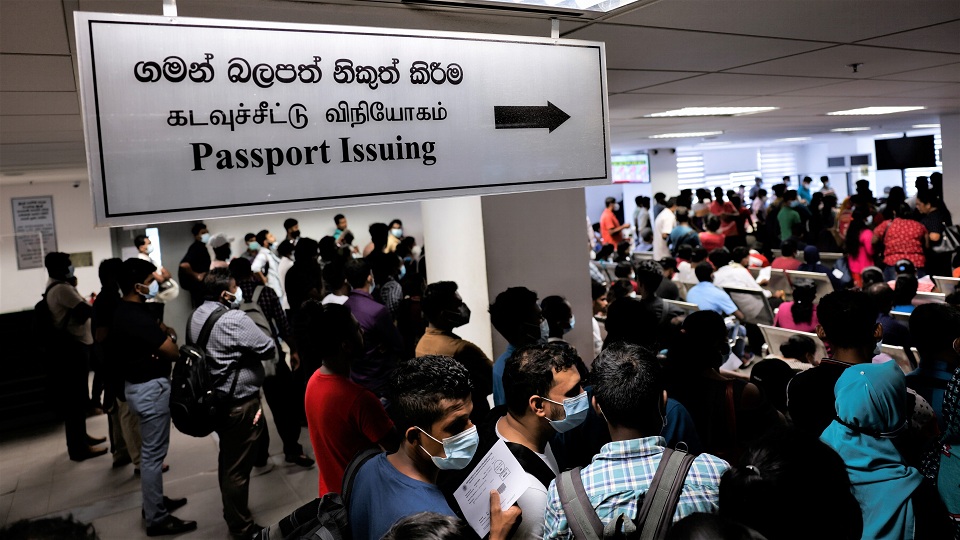
Sri Lanka’s outward migration has reached unprecedented levels in recent years. Hundreds of thousands of Sri Lankans have sought employment overseas as inflation, unemployment, currency depreciation, and declining living standards pushed families into economic distress. The labour vacuum has become particularly visible in the construction, hospitality, healthcare, and manufacturing sectors, where employers complain that experienced workers are no longer available.
Ironically, while this exodus has weakened domestic industries, it has simultaneously become one of the country’s biggest economic lifelines.
Worker remittances from Sri Lankan migrants especially female domestic workers employed in Middle Eastern countries such as Saudi Arabia, Kuwait, Qatar, and the United Arab Emirates have emerged as Sri Lanka’s single largest source of foreign exchange earnings. These inflows helped stabilise foreign reserves during the worst phase of the financial crisis and continue to play a critical role in supporting the national economy.
Economists point out that Sri Lankan housemaids working abroad have effectively become unofficial economic rescuers, sending billions of dollars annually back home to support families and sustain the country’s balance of payments. Despite criticism over the social costs of labour migration, particularly the separation of mothers from children, successive governments have remained heavily dependent on migrant remittances to keep the economy afloat.

Against this backdrop, the Government’s new inbound migration policy reflects an attempt to balance two competing realities protecting employment opportunities for Sri Lankans while ensuring industries can access foreign expertise when local labour is unavailable.
Officials say the proposed framework will centralise currently fragmented administrative procedures spread across multiple state institutions. It is also expected to introduce a national information system to monitor foreign labour inflows and strengthen oversight mechanisms.
Labour Minister Dr. Anil Jayantha Fernando has been tasked with steering the policy initiative through a special committee chaired by the Labour Ministry Secretary.
The move marks a historic turning point for Sri Lanka: a nation once known primarily for exporting labour is now preparing to import workers to sustain its own economy.
By a Special Correspondent