




By Investigative Desk, Harideshaya, January 10, 2026
The Wakfs Board of Sri Lanka, a statutory body with a 70-year history, finds itself at the center of a storm involving allegations of systemic corruption and property fraud. While recent media reports suggest a massive criminal investigation is closing in on the institution, the Board has issued a stern rebuttal, claiming the reports are malicious and factually incorrect.
The Allegations: Property Fraud and CID Involvement
Reports from ColomboWire claim that the Criminal Investigation Department (CID) has launched a wide-ranging probe into the Board for allegedly abusing powers under Section 56 of the Muslim Mosques and Charitable Trusts (Wakf) Act No. 51 of 1956. The allegations center on high-value properties in Dehiwala, which were reportedly sold or transferred without proper valuation or community consent.
Furthermore, the media reports state that CID officers entered the Wakfs Board headquarters on Friday, January 2, 2026, to secure documents—marking the first such raid in 70 years—and that several officials fled the premises to avoid arrest.
The Rebuttal: Clarifying the Police Inquiry
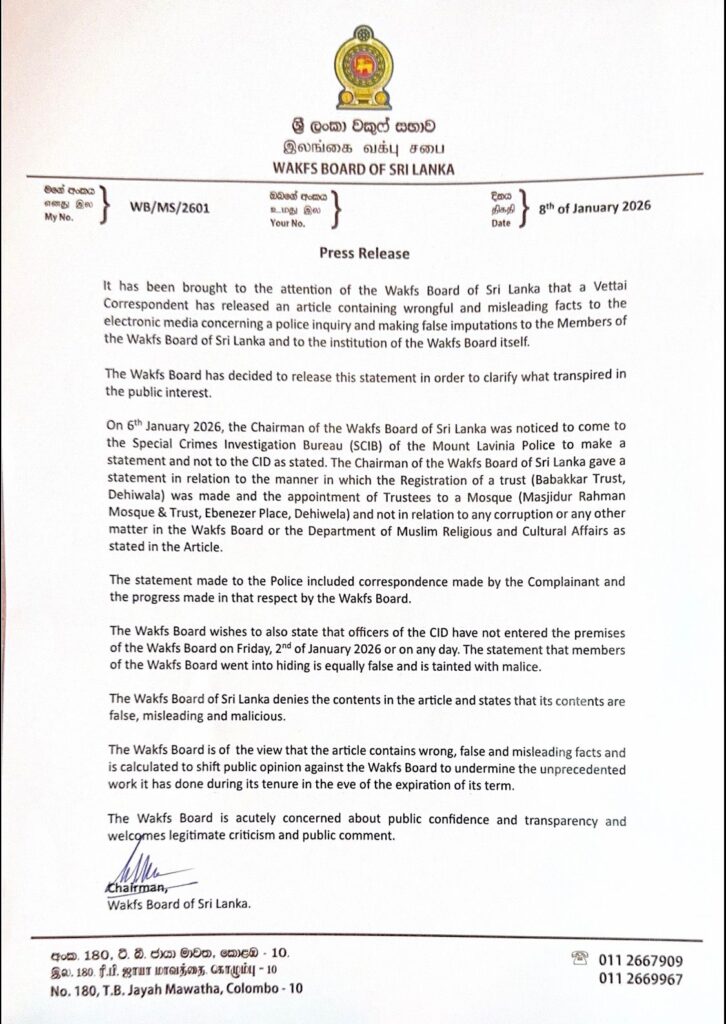
In an official press release dated January 8, 2026, the Wakfs Board categorically denied these claims. The Board clarified that:
- The Agency: The Chairman was noticed to appear before the Special Crimes Investigation Bureau (SCIB) of the Mount Lavinia Police, not the CID.
- The Date: This visit occurred on January 6, 2026, rather than the dates previously alleged.
- The Subject Matter: The inquiry was not related to corruption, but rather the registration of the Babakkar Trust (Dehiwala) and the appointment of trustees to the Masjidur Rahman Mosque & Trust (Dehiwala).
- The Raid: The Board emphasized that CID officers never entered the premises on January 2nd, and no members went into hiding.
A Clash of Perspectives
The Wakfs Board views these media reports as a calculated attempt to shift public opinion against them as their current term nears expiration. They maintain that their work has been “unprecedented” and that they welcome “legitimate criticism” while rejecting “malicious” imputations.
Conversely, investigative sources cited by ColomboWire suggest that the Dehiwala transaction may be part of a broader “parallel land-dealing network”. They point to Section 56 of the Act, which criminalizes false declarations and fraudulent conduct, as the potential basis for criminal charges.
As the investigation continues, the focus remains on whether these incidents are administrative disputes over trustee appointments or a deeper “criminal breach of trust”. For the Muslim community, for whom these properties are held in perpetual trust, the outcome of this probe will be a defining moment for religious governance in Sri Lanka.