




“Cyclone Ditwah Puts Sri Lanka’s IMF-Backed Economic Recovery to the Test”
By a special correspondent
Sri Lanka’s post-Cyclone Ditwah recovery has highlighted the core tension within its IMF-backed reform programme: financing urgent reconstruction without eroding fiscal credibility.
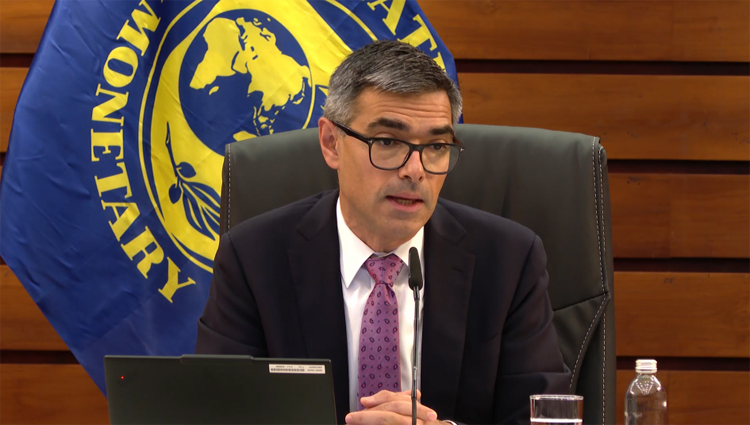
The IMF’s approval of US$200 million under the Rapid Financing Instrument provided immediate relief, but it came with firm limits. The facility is strictly one-off, tightly ring-fenced for disaster response, and does not signal a relaxation of longer-term reform obligations. This reflects the IMF’s view that humanitarian emergencies do not suspend macroeconomic discipline.
The government’s approval of a Rs. 500 billion supplementary estimate has significantly weakened fiscal indicators. The 2026 Budget deficit now stands at 6.5% of GDP, reversing the consolidation path established since 2023. More concerning is the sharp decline in the primary surplus, which is projected at just 1% of GDP in 2026, compared with 3.8% in 2025.
Authorities argue that financing will come from existing cash buffers and surplus overperformance in 2025. However, this strategy carries risks. Cash buffers are finite, and repeated shocks could quickly exhaust them. Moreover, reliance on buffers postpones the challenge of aligning permanent expenditure pressures with sustainable revenue growth.
This is why the IMF has strongly emphasised donor-funded reconstruction. Grants and highly concessional loans would allow Sri Lanka to rebuild without adding to its already fragile debt stock. Failure to secure strong commitments at the planned early-2026 donor conference would force difficult trade-offs, including spending cuts or politically sensitive revenue measures.
Transparency will be another key test. The IMF has repeatedly warned against reconstruction spending evolving into permanent fiscal expansion. Strong audit mechanisms, time-bound allocations, and parliamentary oversight will be critical to maintaining programme credibility, particularly given Sri Lanka’s past governance weaknesses.
While the IMF is expected to allow limited and temporary deviations from fiscal targets under the EFF’s exogenous shock provisions, this flexibility will depend on a credible medium-term consolidation plan. Core reforms such as protecting revenue measures, avoiding new tax exemptions, and controlling non-essential spending remain non-negotiable.
Cyclone Ditwah has therefore transformed Sri Lanka’s IMF programme into a broader test of governance. The coming year will determine whether the country can balance compassion with discipline, or whether emergency spending will once again derail reform momentum.